Heat resistant cloth and heat stress: balancing thermal protection with employee comfort
Working in high-temperature industrial environments presents two important challenges: protecting employees from external heat and preventing excessive heat build-up within the body. Heat resistant cloth plays a role in protective workwear used around furnaces, hot machinery and other thermal hazards. However, clothing designed to limit heat exposure can sometimes restrict the body’s natural cooling processes.
In certain applications, flame resistant cloth may also be required to address exposure to flames. However, flame resistance alone does not establish how effectively clothing manages heat transfer or supports the body’s cooling mechanisms. For manufacturers, finding the right balance between protective performance and employee comfort is essential. The objective is not simply to choose lighter clothing, but to ensure workers have appropriate thermal protection while reducing their risk of heat stress.
Understanding how protective textiles interact with workplace conditions can help industrial safety teams make better decisions about garment selection, working practices and employee wellbeing.
1. Why heat resistant cloth can influence workplace heat stress?
Heat resistant cloth used in protective workwear is designed to withstand particular thermal conditions or limit heat transfer, depending on its intended purpose and tested performance. However, protecting the body from external heat is different from allowing the body to release internally generated heat.
How protective clothing affects body temperature?
During physical work, the body produces heat. Sweating and evaporation help release some of this heat into the surrounding environment. Certain protective clothing constructions, particularly heavily insulated or less breathable garments, may restrict heat loss. This can increase thermal strain, especially when employees perform demanding tasks in hot or humid surroundings. The NIOSH heat stress guidance identifies clothing, physical activity, humidity and environmental heat as factors contributing to occupational heat stress.
Why more insulation is not always better?
Additional insulation may be necessary for particular thermal hazards, but thicker or heavier fabrics do not automatically provide the best overall solution. For example, a worker standing near a furnace may require protection against radiant heat. However, clothing that substantially restricts moisture evaporation may also increase the body’s heat burden.
Even when heat resistant fabric provides suitable protection against external thermal hazards, its construction and breathability can influence how comfortably employees perform their tasks. The appropriate balance depends on the garment’s tested protective performance, working environment and duration of exposure. Heat resistant cloth should therefore be evaluated for both its protective function and its effect on employee heat strain.
2. How fabric properties affect employee comfort in hot workplaces?
Different protective fabrics can behave differently when exposed to workplace heat. Comfort depends on several factors, including material construction, garment design, air movement and the conditions in which clothing is worn.
Important fabric and garment characteristics:
| Characteristic | Why it matters |
|---|---|
| Thermal protection | Helps limit exposure to identified external heat hazards |
| Breathability | Influences the movement of air and moisture through the material |
| Moisture management | Affects how perspiration is managed within the clothing system |
| Fabric weight | May influence garment bulk, flexibility and wearer comfort |
| Garment fit | Supports movement and appropriate protective coverage |
| Layering | Can affect both thermal protection and the body’s ability to lose heat |
When comparing heat resistant fabric options, manufacturers should assess these characteristics alongside the material’s tested protective performance. A breathable material may feel more comfortable during physical work, but breathability alone does not establish suitability for industrial heat hazards. Similarly, moisture-wicking properties should not be interpreted as evidence of flame resistance or adequate thermal protection.
Why the complete garment matters?
Even when a fabric has suitable characteristics, garment construction can influence comfort. Poorly positioned seams, restrictive closures or excessive bulk may make repetitive activities more difficult. Workers may also wear gloves, helmets, respiratory protection and safety footwear, all of which can affect overall heat burden. Manufacturers should therefore evaluate the complete protective clothing system rather than assessing individual fabric characteristics in isolation. For more information on selecting suitable garments, safety workwear requirements should be considered alongside employee movement and workplace conditions.
3. Heat resistant cloth in different manufacturing environments?
The balance between thermal protection and comfort varies according to industrial activities. A worker standing near heated equipment may experience different conditions from someone performing physically demanding maintenance inside a hot production area.
Common industrial applications:
| Manufacturing environment | Potential heat-related challenge | Considerations for protective workwear |
|---|---|---|
| Steel and metal processing | Radiant heat and hot surfaces | Appropriate thermal protection combined with workplace heat controls |
| Glass manufacturing | Heat exposure near furnaces and forming equipment | Garment suitability, exposure duration and employee recovery |
| Ceramic manufacturing | Elevated temperatures around kilns | Protective coverage, movement and heat-stress monitoring |
| Industrial furnace maintenance | High environmental heat and physically demanding tasks | Appropriate PPE, controlled exposure and recovery periods |
| Boiler and utility maintenance | Residual heat and potentially restricted working spaces | Task-specific protection, ventilation and safe work planning |
These examples illustrate why identical clothing arrangements may not be appropriate for every high-temperature workplace. In operations involving potential flame exposure, flame resistant cloth may be necessary as part of the protective clothing system. Its suitability should be established through relevant performance testing and workplace risk assessment.
Consider the duration of exposure:
Heat-related risks can increase when workers remain in challenging conditions for extended periods. A technician performing a brief inspection near heated equipment may have different requirements from an employee carrying out prolonged maintenance in the same area. Industrial safety teams should consider the combination of exposure duration, workload, environmental heat and clothing characteristics. Protective clothing remains necessary where hazards require it, but the wider work process should be designed to reduce unnecessary exposure.
4. How manufacturers can assess heat stress when protective clothing is required
Workplace temperature alone does not provide a complete picture of heat-stress risk. Humidity, radiant heat, air movement, physical activity and protective clothing can all affect how much heat the body accumulates.
Assessing working conditions:
Manufacturers can use recognized occupational heat-stress assessment methods to understand the conditions employees experience. The ISO 7243 standard describes a screening method using the Wet Bulb Globe Temperature (WBGT) index. WBGT assessment considers environmental factors relevant to heat exposure and can support decisions about whether more detailed evaluation is needed. When protective clothing affects heat exchange, the assessment should account for its additional burden using appropriate methods.
Consider employee feedback:
Environmental measurements should be supported by observations of how employees perform their tasks.
Safety teams can review:
- Reports of excessive heat discomfort during particular activities.
- Difficulty completing demanding tasks while wearing protective garments.
- Repeated requests for unscheduled cooling breaks.
- Issues involving restricted movement or poorly fitting clothing.
- Signs of heat-related illness that require immediate attention.
Employee feedback helps identify practical concerns, but it should not replace formal heat-risk assessment or medical evaluation where necessary.
5. Reducing heat stress without compromising thermal protection:
Improving employee comfort should never involve removing essential protective features or using garments that do not meet the identified workplace hazards. Instead, manufacturers should combine suitable clothing with workplace measures that reduce heat exposure.
Practical heat-stress prevention measures:
Improve the working environment: Where feasible, use appropriate insulation, heat shields, ventilation and process controls to reduce unnecessary exposure.
Plan exposure and recovery: Organise work periods and breaks according to assessed heat conditions, work intensity and the protective equipment being worn.
Provide hydration facilities: Ensure drinking water is readily accessible and employees understand the importance of maintaining hydration.
Support heat acclimatisation: Employees newly assigned to hot work, or returning after an extended absence, may require a gradual increase in exposure.
Train employees and supervisors: Workers should recognise potential heat-related symptoms and understand how to obtain immediate assistance.
The OSHA heat protection guidance recommends using engineering controls and appropriate work practices to reduce occupational heat exposure. India’s heatwave safety advisory also reinforces the importance of preventive measures for workers exposed to high temperatures.
Why protective clothing should not be modified casually?
Employees should not independently remove required protective layers, open closures in hazardous areas or make unauthorized garment modifications to improve comfort. Such changes may compromise the protective coverage intended for the task. Where employees consistently experience discomfort while wearing heat resistant clothing, the appropriate response is to reassess the garment, working conditions and heat-control arrangements.
6. Evaluating heat resistant workwear through employee trials:
Before introducing new protective clothing across an industrial facility, a controlled workplace trial can help determine whether the selected garments are suitable for the intended tasks. The trial should be organized by the appropriate safety team and should not expose employees to unassessed hazards.
What should a workplace trial evaluate?
A useful trial can examine:
- Protective suitability: Does the garment meet the requirements identified through the workplace risk assessment?
- Movement: Can employees bend, reach, climb and perform their normal activities?
- Comfort: Are there recurring concerns about garment bulk, fit or heat discomfort?
- PPE compatibility: Does the garment work with other required protective equipment?
- Condition after use: Does the garment remain suitable after normal wear and approved cleaning?
- Employee feedback: What practical improvements are reported by operators and supervisors?
Feedback can be collected across different shifts and tasks rather than relying on a single employee’s experience.
Comparing garments responsibly:
When evaluating different designs, manufacturers should ensure that each option meets the necessary protective requirements. A lighter garment should not replace a more protective one simply because employees find it more comfortable. Similarly, modifications intended to improve airflow or flexibility should not be introduced without confirming that the garment’s protective performance remains appropriate. This approach helps organizations address comfort without treating safety and ergonomics as separate decisions.
7. How managed workwear services can support long-term garment suitability
Protective clothing requirements can change as manufacturing operations expand, equipment is upgraded or employee responsibilities evolve. A structured workwear management process can help organizations maintain suitable clothing across these changes.
Maintaining fit and garment condition:
Regular garment inspection can identify wear, damage or changes in condition that affect suitability. Appropriate laundering and authorized maintenance also help keep garments serviceable according to their approved requirements. Manufacturers should confirm that any external textile provider can support the specific protective clothing and care procedures involved.
Supporting garment availability:
Employees need access to correctly sized garments that match their assigned activities. A managed textile service can help coordinate garment allocation, collection, processing and replacement. Lindström’s workwear service covers garment sourcing, fitting, laundering, maintenance and scheduled deliveries for industrial businesses. However, heat resistant clothing should only be selected and maintained under service arrangements appropriate to its required performance and approved specifications.
Conclusion:
Heat resistant cloth plays an important role in protective workwear for high-temperature manufacturing environments, but managing employee heat stress requires more than selecting a suitable fabric. Garment construction, environmental conditions, physical workload and exposure duration all influence thermal comfort. Industrial manufacturers should evaluate the protective clothing system alongside workplace heat assessments, operational controls and employee feedback. The goal is to provide the necessary thermal protection while minimizing unnecessary heat strain and supporting safer working conditions throughout the production process.
Frequently Asked Questions:
Can workers loosen or unzip heat-protective clothing to cool down?
Workers should not loosen or remove required protective clothing while exposed to hazards that demand full coverage. If the clothing causes excessive heat discomfort, they should follow the established procedure for stopping work and moving to a safe recovery area. Recurring concerns should prompt a review of workplace controls and garment suitability.
Can cooling vests be worn underneath heat-resistant protective garments?
Cooling vests may be suitable for certain industrial applications, but their compatibility with the complete protective clothing system must be verified. Additional layers can affect garment fit, coverage and protective performance. Employers should confirm suitability with the relevant equipment manufacturers and safety specialists before use.
Does a higher fabric GSM mean better heat protection?
Not necessarily. GSM measures fabric weight per unit area, but it does not directly establish protection against every type of thermal hazard. A heavier fabric may provide different insulation characteristics while also affecting comfort and movement. Manufacturers should rely on relevant protective performance tests.
Should heat-resistant workwear be replaced when it becomes soaked with sweat?
Sweat saturation does not automatically mean a garment has lost its protective performance. However, wet clothing may affect comfort and, depending on the protective system, its suitability for continued use. Employees should follow approved procedures for changing or assessing affected garments rather than making independent decisions.
Can heat-resistant cloth provide sufficient protection in confined spaces?
Heat-resistant clothing alone cannot make confined-space work safe. Confined spaces may present additional hazards involving atmospheric conditions, oxygen levels, restricted movement and difficult emergency access. Entry should follow the facility’s confined-space risk assessment, permit procedures and applicable protective equipment requirements.
Can employees experience heat stress during night shifts?
Yes. Industrial heat stress is not limited to daytime temperatures or sunlight. Employees working near furnaces, boilers and other heat-generating equipment may experience significant exposure during night shifts. Environmental conditions, physical workload and protective clothing should still be assessed.
What should manufacturers verify before replacing existing protective garments with lighter alternatives?
Manufacturers should confirm that the replacement garments provide the required protection against identified workplace hazards. The review should include relevant certifications, garment construction, PPE compatibility and working conditions. Employee comfort trials can support the decision but should not replace technical approval of the protective clothing.

Related
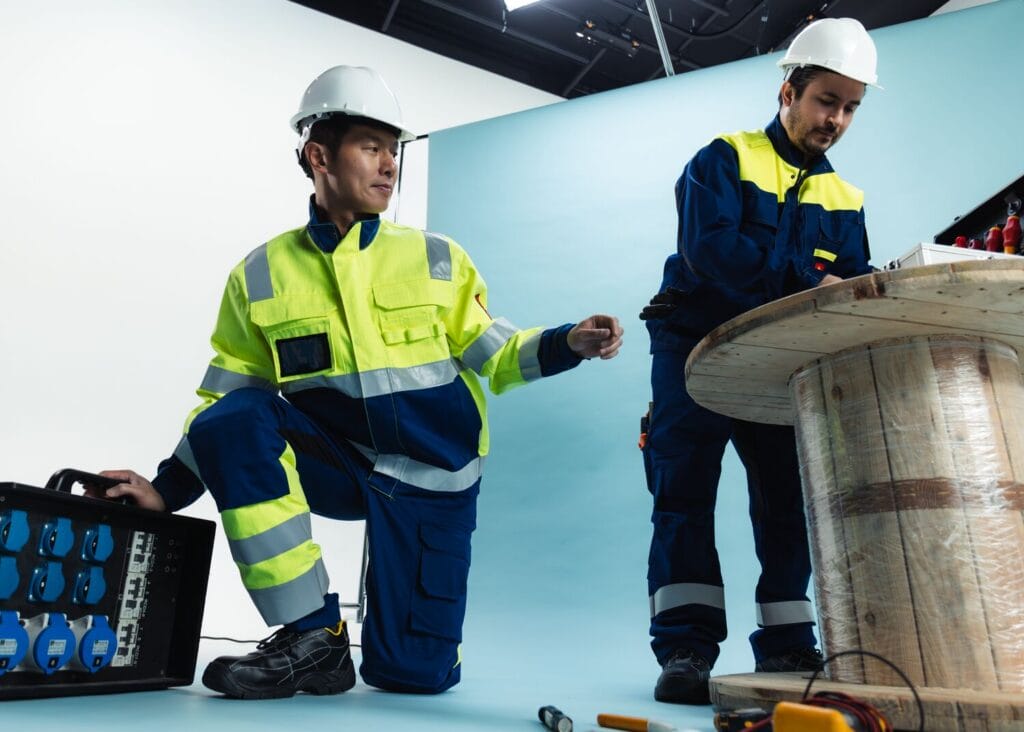
Discover what makes fabric flame resistant, how heat resistant fabric differs, and which factors influence protection in industrial workwear.
Learn how industrial laundering affects FR suit fit, protective performance and durability, with tips on maintenance, rental services and sustainability.
Discover how cleanroom socks support contamination control in pharma, covering EU GMP Annex 1, gowning, fit, laundering and reusable options.