Safety workwear: how to choose garments that protect your team?
Safety workwear should be chosen according to the real risks in your workplace, not by colour, habit or price alone. The right garments depend on the job role, hazards, working conditions, hygiene needs, comfort, fit and how the clothing will be washed, repaired and replaced.
For industrial employers in India, this decision is especially important because workwear must perform in heat, humidity, dust, monsoon conditions, long shifts, outdoor areas, hygiene-sensitive production zones and multi-shift operations. A garment that looks suitable on day one can become unsuitable if it is washed incorrectly, damaged, unavailable for a shift or used in the wrong work area.
This guide explains how EHS managers, operations teams and procurement teams can choose safety workwear for Indian workplaces, compare garment types, understand key compliance points and decide whether buying uniforms or using a managed workwear service is the better option.
How to choose safety workwear?
Safety workwear should be selected through a workplace risk assessment. Start by identifying the hazards each role faces, then choose garments that match the task, working environment, comfort needs, hygiene requirements, visibility needs, laundering process and replacement cycle.
For Indian workplaces, also consider heat, humidity, dust, rain, night shifts, outdoor work, employee movement, multiple shifts and whether clean, maintained workwear will be available every day.
Why safety workwear is more than a uniform?
A uniform helps people look consistent. Safety workwear has a bigger job.
It supports workplace safety by helping protect employees from risks linked to their tasks and environment. These risks may include dirt, oil, low visibility, heat, sparks, hygiene-sensitive production, moving machinery or contamination risks.
For EHS managers, operations teams and procurement teams, the question is not only “What should we buy?”
It is also:
- Is the garment right for this task?
- Will employees wear it correctly?
- Is it comfortable in daily work?
- Can it be washed in the right way?
- Will damaged garments be repaired or replaced quickly?
- Will clean stock be available for every shift?
That is where many workwear programmes become difficult. Choosing industrial safety clothing is one part of the job. Keeping it fit for purpose is the part that often needs more planning.
What is safety workwear?
Safety workwear is protective clothing designed to support workplace safety during daily industrial tasks. It may include coveralls, jackets, trousers, coats, high-visibility garments, protective coats, flame-resistant clothing or hygiene-sensitive workwear.
Unlike a basic uniform, safety workwear is selected according to the worker’s task, workplace hazard, garment condition, fit, wash process and replacement cycle.
For Indian workplaces, safety workwear must also suit local working conditions such as heat, humidity, dust, rain, long shifts and hygiene requirements in sectors such as food, pharma, healthcare, automotive, electronics, logistics and manufacturing.
Safety workwear vs uniform vs PPE:
A common mistake is using the words uniform, safety workwear and PPE as if they mean the same thing. They overlap, but they are not always identical.
| Category | Main purpose | Examples | Selection basis |
|---|---|---|---|
| Uniform | Identification, brand consistency and professional appearance | Shirt, trouser, coat, tunic | Company policy, brand standards and appearance |
| Safety workwear | Supports worker safety and task suitability | Coverall, jacket, trousers, high-visibility garment, protective coat | Job role, hazard, comfort, fit, laundering and replacement |
| PPE | Protects against specific workplace risks | Gloves, goggles, helmet, respirator, certified protective clothing | Risk assessment and applicable safety requirements |
Some safety workwear can be part of PPE when it is selected to protect against a specific workplace risk. The exact requirement depends on the task, risk assessment and applicable safety standards.
Types of safety workwear used in Indian workplaces:
Different job roles need different types of protective workwear. A maintenance technician, machine operator, quality inspector, warehouse worker, food production worker and visitor may all work on the same site but need different garment features.
| Type of safety workwear | Common use | Key selection factors |
|---|---|---|
| Industrial coveralls | Manufacturing, maintenance, automotive, engineering and general factory work | Fabric durability, fit, pocket placement, easy movement and snag resistance |
| Work jackets and trousers | Production, maintenance, warehouse and plant operations | Comfort, size range, reinforced areas, fastenings and task suitability |
| High-visibility workwear | Warehouses, logistics, yards, loading areas, vehicle movement zones and night shifts | Reflective material, visibility class, garment coverage and performance in rain, fog or low light |
| Flame-resistant clothing | Welding, foundries, hot work, electrical maintenance and heat-exposure areas | Flame resistance, heat exposure, wash durability and relevant certification |
| Food and pharma workwear | Food processing, pharma, healthcare and controlled areas | Hygiene, contamination control, controlled changing and professional laundering |
| Visitor and contractor workwear | Site visitors, temporary workers, auditors and contractors | Size availability, cleanliness, easy issue and return, stock control |
| Outdoor safety workwear | Loading bays, utilities, transport, logistics and construction-adjacent sites | Rain protection, visibility, breathability, drying time and comfort |
| Cleanroom or controlled-area workwear | Electronics, pharma, biotech and cleanroom environments | Particle control, garment design, changing procedure, laundering and contamination control |
The best approach is to map workwear to the role, not to issue the same garment to everyone on the site.
Start with workplace risks, not garment types:
The best starting point is a risk-based review of your workplace. Safety uniforms should match the hazards employees face during their actual workday.
A good review should look at:
- the tasks people perform.
- the machinery, tools and materials they work with.
- contact with oil, grease, dust, chemicals or food ingredients.
- indoor and outdoor working conditions.
- visibility needs in yards, loading areas or near vehicles.
- heat, humidity, rain and seasonal changes.
- hygiene requirements in food, pharma, healthcare or electronics environments.
- how often garments become dirty or damaged.
- how many clean changes each employee needs.
- how damaged garments are repaired or replaced.
- whether clean garments are available at the start of every shift.
- whether visitor and contractor garments are managed properly.
This helps avoid two common problems: under-specifying garments that do not give enough protection, and over-specifying garments that are uncomfortable, costly or unnecessary for most employees.
Indian standards and compliance points to consider:
Safety workwear selection should start with a workplace risk assessment and applicable compliance requirements. Depending on the hazard, procurement and EHS teams may need to check whether garments align with relevant Indian or international standards.
For high-visibility clothing, BIS documentation refers to IS 15809:2017 for “High Visibility Warning Clothes — Specification.” The BIS product manual also refers to high-visibility garment types, classes and design configurations such as coveralls, jackets and vests.
For protective clothing against heat and flame, BIS documentation refers to IS 15748:2022 / ISO 11612:2015 for clothing to protect against heat and flame. The BIS product manual covers minimum performance requirements for protective clothing used against heat and flame.
Use the table below as a practical starting point. Your EHS, compliance or legal team should confirm the exact requirements for your workplace.
| Risk area | What to check before selecting workwear |
|---|---|
| Low visibility | Reflective material, garment class, coverage, colour, visibility in rain, fog, yards and night shifts |
| Heat and flame | Flame spread, heat exposure, molten splash, contact heat and wash durability |
| Hygiene-sensitive work | Controlled changing, laundering, contamination control, garment segregation and replacement |
| Machinery proximity | Fit, fastenings, loose fabric, pocket placement, sleeve length and trouser length |
| Outdoor work | Rain, humidity, ventilation, drying time, reflective performance and comfort |
| Chemical or oil exposure | Fabric suitability, contamination control, wash process and garment replacement cycle |
| Multi-shift operations | Number of clean changes, delivery schedule, stock buffer and repair process |
Match safety workwear to job roles:
Not everyone on the same site needs the same protective workwear. A maintenance technician, machine operator, quality inspector, warehouse worker and visitor may all need different garment features.
A role-based approach also helps procurement teams avoid unnecessary standardisation. The same site may need durable industrial workwear for operators, high-visibility garments for logistics teams, hygiene-focused workwear for food or pharma areas and simple visitor coats for temporary access. Matching garments to roles makes the programme safer, easier to manage and more cost-effective.
Production and machine operators:
Operators often need durable, well-fitting garments that do not get caught in moving parts. Loose sleeves, open jackets or poor trouser length can create avoidable risk. Fastenings, pocket placement and garment fit matter here.
Look for:
- correct garment fit.
- secure fastenings.
- practical pocket placement.
- durable fabric.
- comfortable movement.
- easy laundering and maintenance.
Maintenance and engineering teams:
Maintenance work can involve oil, grease, tools, sharp edges, sparks or kneeling. These teams may need stronger fabrics, practical pockets, reinforced areas and easy movement.
Look for:
- abrasion-resistant fabric.
- practical tool-friendly design.
- secure pockets.
- reinforced knees or elbows where needed.
- suitable protection for heat, sparks or oil exposure.
- clear repair and replacement routines.
Warehouse, loading and outdoor teams:
Employees working around vehicles, loading bays or outdoor areas may need high-visibility features. In India, this can be especially important during early mornings, night shifts, monsoon rain, fog or poorly lit yards.
Look for:
- reflective details.
- high visibility colour.
- visibility from multiple angles.
- comfort during active movement.
- weather suitability.
- durable laundering performance.
Food and pharma teams:
In hygiene-sensitive industries, workwear for workplace safety is also about product safety. Garments should support hygiene routines, controlled changing and suitable laundering. This is where home washing or informal laundry can create problems.
Look for:
- controlled laundering.
- clean garment availability.
- suitable changing procedures.
- fabric and design suitable for the production area.
- garment segregation where required.
- replacement of damaged or contaminated garments.
Visitors and temporary workers:
Visitor garments should not be forgotten. They need to be available in suitable sizes, clean and easy to manage. This is often a stock control issue as much as a garment selection issue.
Look for:
- simple garment design.
- broad size availability.
- easy issue and return process.
- controlled washing.
- clean backup stock.
- clear storage routine.
Practical checklist: choosing safety workwear
Use this checklist before selecting or changing your workwear programme.
| Question | Why it matters |
|---|---|
| What hazards does each role face? | Workwear should match real risks, not assumptions |
| Does the garment fit the task? | Poor fit can reduce comfort and may create safety risks |
| Is it suitable for Indian working conditions? | Heat, humidity, dust, rain and long shifts affect comfort and correct use |
| Does the garment support movement? | Workers are more likely to wear workwear correctly when it allows natural movement |
| Are fastenings and pockets safe for the task? | Loose fabric, open fastenings or badly placed pockets may create snagging or hygiene risks |
| Does the role need high visibility? | Warehouses, yards, loading areas and night shifts may require reflective or high-visibility garments |
| How often will it need washing? | Dirty or contaminated garments may not perform as intended |
| Who checks for wear and damage? | Tears, missing fastenings and worn reflective details need action |
| How are repairs handled? | Delayed repairs can lead to unsafe or inconsistent workwear |
| What happens when a garment is no longer usable? | Replacement and recycling routines help control waste and cost |
| Will clean garments be available for every shift? | Stock gaps can lead to employees wearing unsuitable clothing |
| Can usage and stock be tracked? | Better visibility helps procurement and operations plan accurately |
Key features to consider in protective workwear:
Protective workwear should be practical first. Small details can make a big difference in daily use. The best safety workwear is not always the heaviest or most expensive option. It is the garment that matches the task, supports safe movement, can be maintained properly and remains usable throughout its service life.
- Fabric and durability: The fabric should suit the work environment. In demanding industrial use, garments need to handle repeated washing, movement and contact with dirt or oil. Durability also supports sustainability because garments that last longer need to be replaced less often.
- Fit and comfort: Employees are more likely to wear safety workwear correctly when it fits well and feels comfortable. Garments that are too tight restrict movement. Garments that are too loose may catch on equipment or feel uncomfortable during active work. For Indian sites, comfort often means paying attention to heat, humidity, ventilation and ease of movement.
- Visibility: High-visibility details can support safety in areas with moving vehicles, low light or outdoor work. This may include loading bays, warehouses, road-facing sites, construction-adjacent areas or night-shift operations.
- Practical fastenings and pockets: Hidden buttons, secure fastenings and well-placed pockets can help reduce snagging and support smoother work. Pockets should be useful, but not placed where they interfere with safety, hygiene or movement.
- Hygiene and washability: In many industries, clean looking is not enough. Workwear may need hygienic laundering that supports workplace and product safety. This is especially important in food, pharma, healthcare and other controlled environments.
- Repair and replacement needs: Safety uniforms should be checked regularly. Missing buttons, broken zips, torn seams or faded reflective areas should not be ignored. A clear repair and replacement process helps keep garments in safe, usable condition.
Why maintenance matters after selection?
Even the right safety workwear can become the wrong workwear if it is not maintained properly.
Garments can lose their usefulness when they are:
- washed incorrectly.
- repaired with unsuitable materials.
- used after damage.
- shared without control.
- stored in dirty areas.
- not replaced when worn out.
- unavailable when employees start their shift.
For procurement teams, this is also a cost issue. Buying cheaper garments may look attractive at first, but the full cost includes washing, repairs, replacements, storage, stock losses and administration.
For EHS and operations teams, the bigger issue is reliability. Employees need the right garment, in the right size, at the right time.
Managed workwear vs buying safety uniforms:
Many companies start by buying safety uniforms outright. That can work for simple use cases, but it can become difficult when the site has multiple shifts, hygiene requirements, high garment usage, frequent repairs, visitors, contractors or changing employee sizes.
| Buying safety uniforms | Managed workwear service |
|---|---|
| One-time purchase cost is visible | Service cost is planned and easier to manage |
| Employer manages washing, repairs and storage | Service partner handles laundering, maintenance and delivery |
| Stock levels can be difficult to track | Garment quantities and deliveries can be managed more systematically |
| Damaged garments may stay in use too long | Repairs and replacements are part of the routine |
| Employees may wash garments at home | Garments are washed through a controlled laundry process |
| Unused stock can build up | Stock can be adjusted based on actual need |
| Disposal is often not planned | End-of-life garments can be handled through reuse or recycling routes where available |
| Procurement workload can increase over time | Administration is reduced through a service model |
| New joiners and size changes need manual handling | Employee changes can be managed as part of the service process |
| Multi-shift operations need extra stock planning | Clean garment availability can be planned around shift needs |
How managed workwear helps EHS, operations and procurement?
A managed workwear service can support different teams in different ways:
| Team | How managed workwear helps |
|---|---|
| EHS managers | Helps keep protective workwear aligned with workplace risks, garment condition and replacement routines |
| Operations managers | Reduces daily interruptions caused by missing, dirty or damaged garments |
| Procurement teams | Gives better control over total workwear costs, stock levels and supplier coordination |
| HR and admin teams | Makes onboarding, size changes and employee exits easier to manage |
| Employees | Helps ensure clean, suitable workwear is available when they need it |
Safety workwear selection checklist for Indian factories
Before finalising your safety workwear programme, ask these questions:
- Have we mapped workwear requirements by job role?
- Have we identified visibility, heat, flame, hygiene, contamination or machinery-related risks?
- Have we checked applicable Indian or international standards?
- Have we tested garment comfort in real working conditions?
- Have we considered heat, humidity, rain and long shifts?
- Have we planned how often each employee needs a clean change?
- Have we decided who will inspect garments for damage?
- Have we defined repair and replacement rules?
- Have we planned backup stock for visitors, new joiners and temporary workers?
- Have we compared the full cost of buying versus renting workwear?
- Have we documented laundering and hygiene requirements?
- Have we selected a process for end-of-life garments?
A good safety workwear programme should not stop at garment selection. It should cover the full lifecycle: selection, sizing, issue, use, washing, repair, replacement, stock control and disposal.
How can Lindström help?

Lindström provides a workwear service that supports companies in choosing, using and maintaining workwear for different roles and industries. The service is built around rental, regular laundering, garment maintenance, repairs, replacements, delivery and stock availability.
This means your team does not need to manage every step alone. We help assess workwear needs, provide garments for employees, collect used garments, wash and maintain them, and deliver clean workwear back to the agreed place, such as lockers or another selected area.
For companies in India with multiple shifts, hygiene requirements, seasonal conditions or growing teams, this can make workwear management easier and more predictable.
Frequently Asked Questions:
What is safety workwear?
Safety workwear is clothing used to support workplace safety. It may include coveralls, jackets, trousers, coats or other garments chosen according to job risks, working conditions and hygiene needs.
How do I choose the right safety workwear?
Start with a workplace risk assessment. Look at hazards, tasks, working conditions, comfort, fit, laundering needs and how often garments need to be changed, repaired or replaced.
What is the difference between safety workwear and normal uniforms?
A normal uniform mainly supports identification, brand consistency and appearance. Safety workwear is selected based on hazards, job role, fit, comfort, garment condition, laundering and replacement needs.
Is protective workwear the same as PPE?
Some protective workwear can be part of personal protective equipment when it is needed to protect the wearer from workplace risks. The exact requirement depends on the task, risk assessment and applicable rules.
Which industries need safety workwear in India?
Safety workwear is commonly used in manufacturing, automotive, logistics, food processing, pharma, healthcare, electronics, engineering, maintenance, warehousing, cleanrooms and outdoor industrial operations.
Is high-visibility clothing part of safety workwear?
Yes. High-visibility clothing is a type of safety workwear used where workers need to be seen around vehicles, loading areas, warehouses, yards, road-facing sites, night shifts or low-light conditions.
Why is garment fit important for workplace safety?
Poorly fitting garments can be uncomfortable, restrict movement or create snagging risks near machinery. Good fit helps employees wear their workwear correctly throughout the shift.
Can employees wash safety uniforms at home?
For some workplaces, home washing may not be suitable. It can be difficult to control washing quality, hygiene, repairs and garment condition. Industrial laundering is often a better option for hygiene-sensitive or demanding environments.
How often should safety workwear be replaced?
There is no single answer. Replacement depends on garment type, use, washing frequency, damage and workplace requirements. Garments should be checked regularly and replaced when they are no longer fit for purpose.
Why rent safety workwear instead of buying it?
Rental can reduce the workload linked to purchasing, laundry, repairs, storage, delivery, stock control and replacement. It also helps keep clean and maintained garments available for employees.

Related
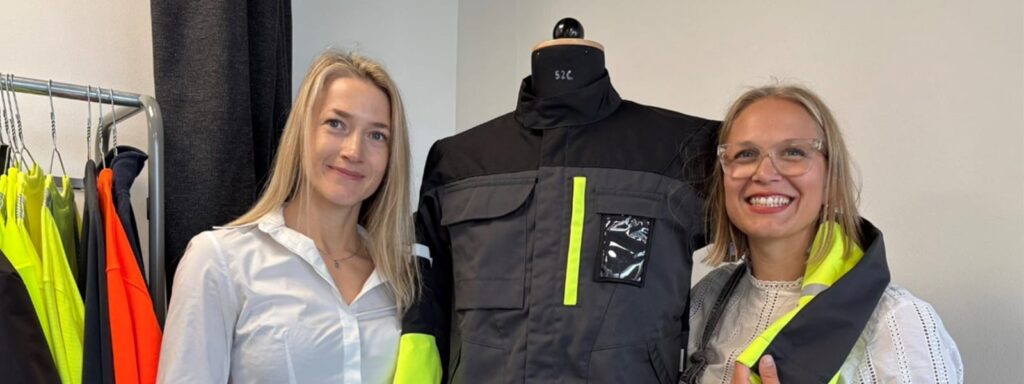
What does a workwear designer do? Lindström designers Jenny Selroos and Karmen Lond explain the inner workings of workwear design.

The term circular textiles is becoming increasingly familiar, but what does it actually mean? In simple terms, a circular textile system aims to keep garments...
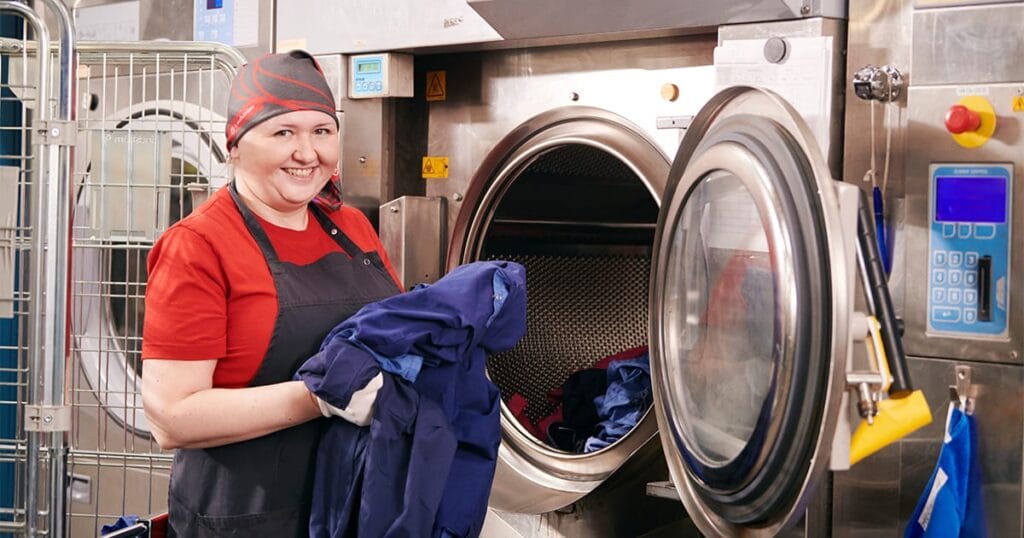
Know how modern workwear procurement improves compliance, garment traceability, hygiene and inventory efficiency in pharma and food processing.