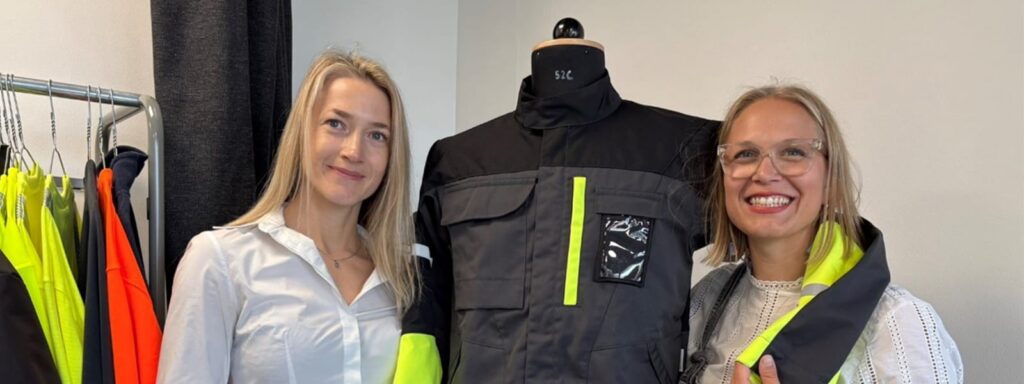
Flame resistant clothing: how to choose the right protection for your team?
When employees work around heat, sparks, flames or other thermal hazards, their workwear has an important job to do.
But choosing flame resistant clothing isn’t simply a matter of finding the garment with the longest list of protective features. Different jobs involve different risks. The right FR clothing needs to be selected according to the task, working environment and level of protection required, while still being comfortable and practical enough to wear throughout the working day.
For managers responsible for safety, procurement or workwear, that means starting with the work itself.
What is flame resistant clothing?
Fire-resistant workwear, also commonly referred to as flame resistant clothing or FR clothing, is protective clothing intended for working environments where employees may be exposed to heat, flame, sparks or related hazards.
The exact level and type of protection depends on the garment, its materials, intended use and any applicable testing or certification. Some protective clothing may also be designed for specific risks such as welding, molten metal splashes, electric-arc hazards, electrostatic discharge or high visibility.
This is why the words fire resistant or flame resistant alone don’t tell you whether a garment is right for a particular job.
Fire-resistant garments and other types of flame resistant apparel can include flame resistant jackets, flame resistant trousers, flame resistant overalls, flame resistant suits and flame resistant aprons. The right combination depends on the risks employees face and how they work.
It is also important to remember that fire-resistant does not mean fireproof. Protective clothing should always be selected according to the risks identified for the job.
Where is flame resistant workwear needed?
Fire-resistant clothing or flame resistant workwear may be appropriate where a workplace risk assessment identifies exposure to heat, flame, sparks or related hazards.
Typical examples can include welding, metalworking, industrial maintenance and some automotive, engineering and electrical tasks.
The important point is to assess individual jobs rather than simply choosing one fire-resistant uniform or the same flame resistant uniforms for everybody.
Two employees in the same facility may face very different risks. A welder, maintenance technician and machine operator, for example, may each require a different type or level of protection.
Protective workwear is also only one part of workplace safety. Risks should first be eliminated or reduced wherever possible. PPE and protective clothing help manage risks that remain.
Start with the workplace risk assessment:
Before comparing fabrics or garment styles, establish what employees actually need protection from.
Consider:
- the hazards involved in each task.
- how long and how often employees are exposed.
- the working environment.
- the movements required during the job.
- other PPE worn at the same time.
- temperature and weather conditions.
- the individual fit requirements of employees.
This helps prevent both under-protection and unnecessary over-specification.
Choosing the highest possible level of protection for every worker might appear to be the safest option. In practice, heavier or more complex garments may be uncomfortable for people who don’t need that level of protection.
Protective workwear, including FR workwear, should therefore match the identified risks and requirements of the job.
Key point: The aim isn’t to choose the garment with the most protective features. It is to choose suitable workwear for the hazards and tasks involved.
A practical buyer’s checklist:
| What to check | Why it matters |
|---|---|
| Workplace hazards | These help determine what type and level of protection may be required. |
| Testing and certification | These provide information about the conditions and hazards the garment has been assessed for. |
| Garment combination | Jackets, trousers and other garments may need to work together as a protective outfit. |
| Fit and movement | Employees still need to bend, reach, kneel, climb and work comfortably. |
| Other PPE | Protective clothing needs to work with the other equipment required for the task. |
| Cleaning and repair | Garments need to be cared for correctly throughout their working life. |
Look beyond the flame resistant fabric:
Fabric is important, but fabric composition by itself does not tell you everything about a protective garment.
When comparing fire-resistant fabric or flame resistant fabric, look at the finished garment and the protection it has been designed, tested or certified to provide.
You may also come across terms such as heat resistant fabric or heat resistant cloth, but these should not automatically be treated as equivalent to flame-resistant protective clothing.
A fabric that is flame resistant does not by itself determine whether the completed garment is suitable for a particular workplace hazard.
Depending on the job, requirements may cover areas such as heat and flame, welding, electric-arc hazards, antistatic properties or high visibility. Not every fire-resistant garment provides protection against all of these hazards.
Ask the supplier to explain clearly:
- what the garment is designed to protect against.
- which standards, tests or certifications apply.
- what level of protection is specified.
- whether different garments need to be worn together.
- any limitations or conditions for use.
The goal isn’t to collect as many protective features as possible. It is to select workwear that matches the actual risks of the work.
Choose jackets, trousers and other garments for the actual job:
Garment type also matters.
A fire-resistant jacket or flame-resistant jacket, for example, should be selected according to the protection required while still allowing employees to reach, lift and move comfortably.
The same principle applies when selecting flame resistant outerwear for employees who may be exposed to relevant workplace hazards.
Flame-resistant trousers also need to work during everyday movements such as bending, kneeling, climbing or working in tight spaces. Pocket placement and other practical details matter when employees regularly carry tools.
For some tasks, a flame resistant suit or overall may be appropriate. Other jobs may require additional protective garments such as an apron.
Don’t select these items individually without considering how the complete workwear combination performs. Protective garments and other PPE need to work together during normal working movements.
Don’t underestimate comfort and fit:
Protective clothing needs to be worn correctly to provide the protection it is designed for.
Poorly fitting garments can make everyday work harder and may restrict movement. Employees are also less likely to be comfortable in flame resistant clothing that is unnecessarily hot, heavy or restrictive.
Fit therefore needs to be part of the selection process, not something considered after the garments have been ordered.
Look at the movements employees make during a normal shift. Do they kneel regularly? Reach overhead? Climb ladders? Work in confined spaces? Spend long periods in warm conditions?
Suitable workwear should support these everyday tasks while meeting the protective requirements identified for the job.
Keep protective workwear clean and in good condition:
Choosing the right garment is only the beginning.
Protective workwear, including FR clothing and flame resistant workwear, also needs appropriate washing, inspection, repair and eventual replacement. Dirt, contamination, damage and wear can affect how a garment performs.
Oily or contaminated garments can be a particular concern in environments where fire or heat hazards exist. Washing, maintenance and inspection should therefore follow the garment manufacturer’s instructions.
Repairs require care too. Alterations or repairs should not compromise the properties or construction of protective clothing.
For managers, this means having a clear process for collecting used workwear, cleaning it correctly, inspecting its condition and removing unsuitable garments from circulation.
Think about the full garment cycle:
Assess the risk → Choose suitable garments → Fit employees → Launder and inspect → Repair or replace
A managed workwear service can simplify the process:
Managing protective workwear across a large workforce can quickly become complicated.
Employees need the right garments and sizes. Used clothing needs to be collected and washed correctly. Damage needs to be identified and repaired, while garments that are no longer suitable need to be replaced.
With a managed workwear service, these activities can be handled as one ongoing process.
At Lindström, we help organisations select suitable workwear for different roles based on their identified requirements, provide and fit the garments, regularly collect used workwear for laundering and repair or replace damaged garments when needed. In India, our Workwear Service covers garment supply, laundering, maintenance, delivery and storage.
For organisations using flame resistant uniforms, FR workwear or other types of flame resistant apparel, this managed approach can help simplify the garment lifecycle. That leaves your team with the part that matters most: making sure the workwear they use is appropriate for the risks and requirements of the job.

Frequently Asked Questions:
What is flame resistant workwear?
Flame resistant workwear is protective clothing intended for environments where employees may face heat, flame, sparks or related hazards. The protection provided depends on the individual garment, its intended use and any applicable testing or certification.
Is FR clothing fireproof?
No. FR clothing should not be considered fireproof. Its performance depends on the garment, material, design and the conditions for which it has been tested or specified.
How do I choose fire-resistant clothing for employees?
Start with the workplace risk assessment. Consider the hazards involved, the tasks employees perform, the working environment, other PPE, fit and the level of protection required for each role.
How should fire-resistant garments be washed and maintained?
Protective garments should be washed, inspected, repaired and replaced according to the manufacturer’s instructions. Cleaning, repairs or alterations should not compromise the properties the garment is designed to provide.
Is fire resistant outerwear enough protection on its own?
Not always. Depending on the hazard, fire resistant outerwear may need to be used as part of a complete protective clothing system with other garments and PPE.
Can a managed workwear service help reduce fire resistant management workload?
Yes. A managed service can support garment supply, fitting, laundering, inspection, repair, replacement and delivery, helping organizations manage flame resistant workwear more consistently.

Related

What makes a good hospital staff uniform? Explore hygiene, comfort, fit, garment availability, laundry and workwear management for healthcare teams.

Plan a garments compliance audit around workplace risks. Explore garment checks, repairs, retirement, employee competency and workwear rental provider reviews.

Learn how cleanroom wipes affect particle transfer, with guidance on wiping pressure, batch traceability, internal audits and contamination control.