

Restaurant chef uniform: how to choose and manage workwear
A good restaurant chef uniform should help your kitchen team work safely, stay comfortable and look professional throughout the shift. It should also be easy to keep clean and available. For restaurants, hotels and catering teams, the real question is not only where to get chef coats. It is how to manage clean, well-fitting kitchen uniforms every day without adding more work for your team.
That is where a workwear rental service can help. It combines garments, hygienic laundering, repairs, replacements, delivery and stock management into one practical service.
Why the right restaurant chef uniform matters?
Kitchen workwear has a practical job to do. It protects the wearer, supports hygiene and helps your team look like one professional unit.
For restaurant owners, hotel managers and procurement teams, the right uniform can help with:
- keeping kitchen teams clean and presentable.
- supporting hygiene routines.
- improving comfort during long shifts.
- creating a consistent brand image.
- making staff easier to identify.
- reducing time spent on laundry and garment follow-up.
A chef uniform is used every day, often in hot and fast-moving conditions. That means small details matter. Fit, fabric, sleeve length, closures, apron choice and laundry routines all affect how well the uniform works in real life.
What should a chef uniform include?
A complete kitchen uniform usually includes more than a chef jacket. The right mix depends on the role, kitchen type and service style.
Common parts of kitchen uniforms:
| Garment | Why it matters | What to consider |
| Chef jacket or chef coat | Gives a clean, professional look and helps protect clothing underneath | Choose a fit that allows movement and feels comfortable in heat |
| Chef trousers | Supports comfort during long shifts | Look for practical fit and easy movement |
| Apron | Adds a useful layer for food preparation and service tasks | Match apron type to the task and brand look |
| Headwear | Helps support hygiene routines | Choose options that are comfortable enough for daily use |
| Service staff uniforms | Creates a consistent front-of-house image | Keep the look aligned with the restaurant brand |
| Kitchen support uniforms | Helps identify roles clearly | Make sure garments are practical for cleaning, prep and dishwashing tasks |
The aim is not to dress everyone the same for the sake of it. The aim is to give each role the right workwear while keeping the whole team visually consistent.
Hygiene should be planned, not left to chance:
Restaurant and hotel kitchens deal with food, heat, spills and fast cleaning routines. Uniforms can quickly become dirty during a shift. If the laundry process is unclear, staff may take garments home, wash them in different ways or reuse items for longer than planned.
This can create problems, such as:
- uneven washing quality.
- unclear responsibility for clean uniforms.
- worn-out garments staying in use.
- missing sizes during busy periods.
- extra work for managers and supervisors
A planned workwear service helps avoid these everyday issues. Clean garments are delivered, used garments are collected, and repairs or replacements can be handled as part of the process.
Comfort is important in hot, busy kitchens:
Chef uniforms must look professional, but they also need to feel good during real kitchen work. A garment that looks sharp but feels heavy, stiff or too tight will not support the team.
What to check for comfort:
When choosing chef uniforms, look at:
- ease of movement around shoulders, arms and waist.
- breathable feel for hot kitchen conditions.
- a fit that works for different body types.
- practical closures and pockets.
- fabric that can handle regular professional washing.
- garment options for chefs, kitchen helpers and service staff.
Comfort also affects compliance. When uniforms are easy to wear, staff are more likely to wear them correctly.
Brand image starts behind the kitchen door:
Restaurant staff uniforms are part of the customer experience. Even when guests do not see the full kitchen team, they often see chefs, service staff, hosts and managers.
A clean, consistent uniform says that the business is organised. It also helps staff feel part of the same team.
For hotels and restaurants, hospitality workwear should match the level of the service. A fine dining restaurant, hotel breakfast team, café kitchen and quick-service restaurant may all need different looks. The key is to choose garments that are practical first, then align the colours and style with your brand.
Buying chef uniforms vs renting a workwear service:
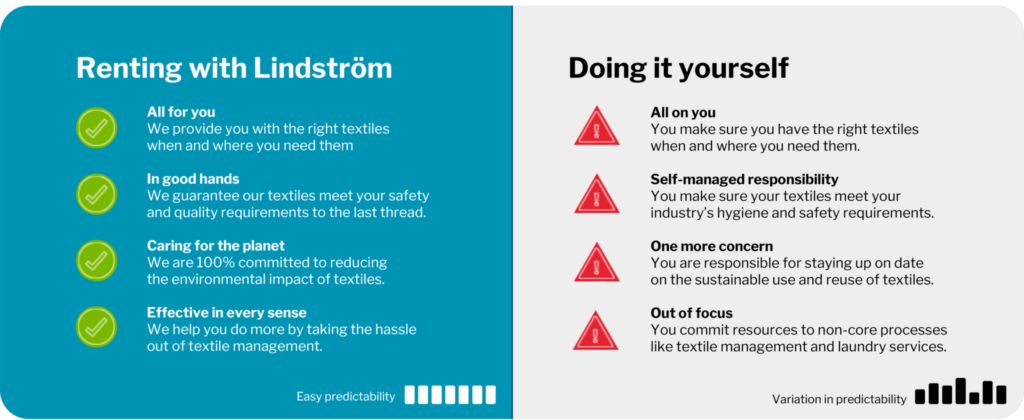
Buying chef uniforms may look simple at first. You select garments, place an order and give them to staff. But the work does not end there. Someone still has to manage washing, damaged garments, missing sizes, new employees and replacements.
A rental service changes the focus from owning garments to having clean workwear available when it is needed.
| Topic | Buying uniforms | Workwear rental service |
| Upfront work | You select, buy and distribute garments | Service provider helps plan the workwear need |
| Laundry | Usually handled in-house or by staff | Included as part of the service |
| Repairs | Managed separately | Damaged garments can be repaired through the service |
| Replacements | Ordered when needed | Replacement process can be part of the service |
| Stock availability | Managed by your team | Planned and managed with the provider |
| Cost visibility | Costs may appear across orders, laundry and admin time | Service model can make costs easier to follow |
| Manager workload | Higher day-to-day follow-up | Less daily workwear administration |
The right choice depends on your business. But for restaurants and hotels with regular staff, changing shifts and high garment use, rental can reduce a lot of manual work.
Restaurant chef uniform checklist for managers:
Use this checklist before choosing chef uniforms, kitchen uniforms or a hospitality workwear service.
Fit and comfort:
- Are the garments comfortable during long shifts?
- Do they allow easy movement?
- Are sizes available for the whole team?
- Do chefs, service staff and kitchen helpers need different garments?
Hygiene and laundry:
- Who is responsible for washing?
- How often are garments changed?
- Is the washing process consistent?
- What happens to stained or damaged garments?
Stock and availability:
- Are clean uniforms always available before shifts?
- How are new starters handled?
- Is there a process for seasonal staff or peak demand?
- Who tracks missing or extra garments?
Brand and appearance:
- Do the uniforms match your restaurant or hotel image?
- Are front-of-house and back-of-house uniforms aligned?
- Do staff look professional and easy to identify?
Cost and workload:
- What is the total cost beyond the garment price?
- How much manager time goes into laundry and stock control?
- Are repairs, replacements and deliveries included?
- Can the service grow with more outlets or teams?
How can Lindström help?

Lindström helps restaurants, hotels and catering businesses manage workwear as a service. Instead of only supplying chef uniforms, we help take care of the full workwear flow.
This can include planning the right garments, delivering clean workwear, collecting used garments, laundering them, carrying out repairs and replacing garments when needed. Lindström India’s workwear service page also explains that clean workwear can be delivered to lockers and used garments taken to laundry, with repairs and replacements handled at the laundry.
For HoReCa businesses, Lindström’s workwear rental service covers the wider chain from needs assessment and textile acquisition to maintenance, storage, replacement, recycling and disposal. This helps your team focus on food, guests and service instead of laundry piles, missing sizes and last-minute uniform problems.

Frequently Asked Questions:
What makes the best restaurant chef uniform?
The best restaurant chef uniform is clean, comfortable, practical and suitable for the kitchen environment. It usually includes a chef jacket, trousers, apron and suitable headwear. The right choice depends on the role, kitchen temperature, hygiene needs and brand style.
How often should chef uniforms be washed?
Chef uniforms should be washed regularly enough to keep them clean, hygienic and presentable. The right frequency depends on the task, shift length and level of soiling. In busy kitchens, many garments need changing after each shift.
Should restaurants buy or rent chef uniforms?
Buying may work for very small teams, but renting can be easier when you need clean garments available every day. A rental service can include laundry, repairs, replacements, delivery and stock management, which reduces work for managers.
What should kitchen uniforms include?
Kitchen uniforms often include chef jackets, trousers, aprons, headwear and role-specific garments for kitchen assistants or cleaning staff. Front-of-house staff may need separate hospitality workwear that matches the restaurant image.
How can restaurants keep uniforms hygienic?
Restaurants can keep uniforms hygienic by setting clear changing routines, using professional laundering, separating clean and used garments, and replacing damaged items. A managed workwear service helps make these steps more consistent.
Why is comfort important in chef uniforms?
Chefs and kitchen staff work long hours in warm, busy spaces. Comfortable garments support movement, reduce irritation and help staff wear their uniforms correctly throughout the shift.
Can restaurant staff uniforms support brand image?
Yes. Clean and consistent restaurant staff uniforms help create a professional look. They also make staff easier to recognise and can support the restaurant’s visual identity.

Related

Choose a medical lab coat that support hygiene, comfort and staff appearance with rental, laundering, repairs and reliable stock management.

Choose the right lab uniform for pharma and healthcare labs, with practical guidance on risks, hygiene, laundering, fit and garment care.

Choose industrial worker uniforms that fit each role, risk and site. See how rental industrial uniform keeps garments clean, maintained and available.
