The Relevance of Pharmaceutical Workwear Vis-A-Vis Safety and Compliance Monitoring in the Business
In the pharmaceutical industry, safety, hygiene, and compliance are the top priorities. One of the areas where a high level of control is exercised is in the selection and usage of pharmaceutical uniform. These clothing have a major significance in contamination prevention, product safeguarding, and worker safety in pharmaceutical industry as well as in pharmaceutical research and development facilities.
Pharmaceutical Workwear is more than a uniform. It is a controlled layer of protection between people, products and the production environment. When selected, worn, laundered and stored correctly, Pharmaceutical Workwear helps reduce contamination risks, supports worker protection and helps pharma facilities follow strict hygiene and quality requirements.
What Is Pharmaceutical Workwear?
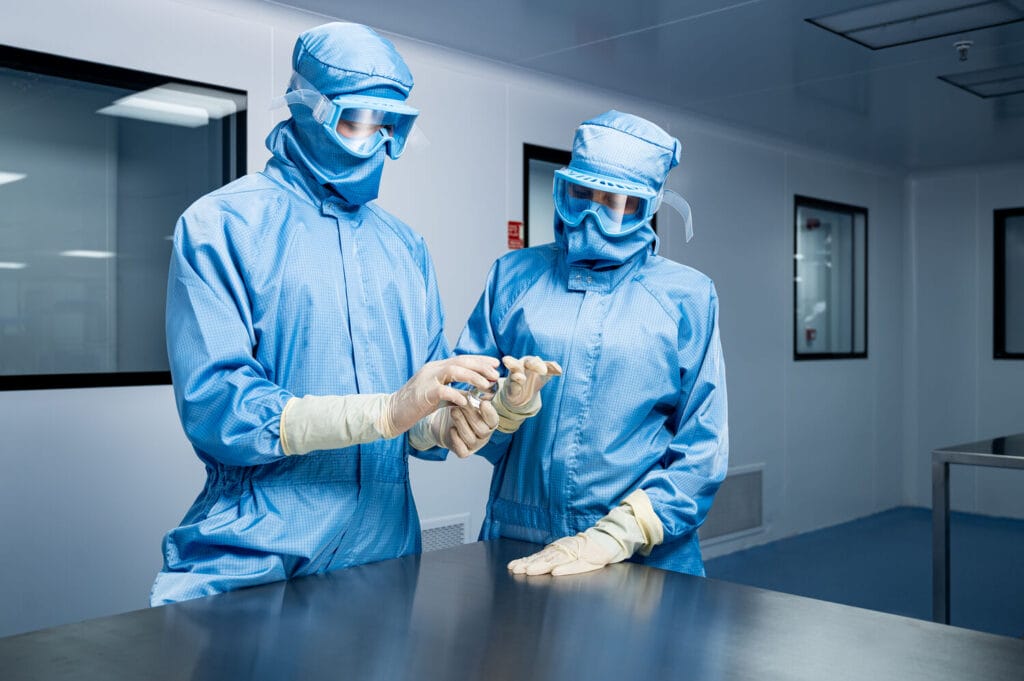
Pharmaceutical Workwear refers to garments and protective clothing used in pharma production, laboratories, packaging areas, quality control rooms and cleanrooms. Depending on the area, it may include coats, coveralls, trousers, tunics, hoods, masks, gloves, sleeve covers, shoe covers, cleanroom garments or anti-static uniforms.
The purpose of Pharmaceutical Workwear is to:
- protect products from contamination.
- protect employees from exposure risks.
- support GMP and hygiene routines.
- reduce particle and fiber release.
- support controlled movement between zones.
- maintain a clean and professional appearance.
- simplify garment control, laundering and replacement.
Examples of acceptable pharmaceutical workwear:
Incorporating pharma uniforms into daily activities increases worker productivity as well as employee morale. To achieve maximum regulatory compliance, Pharmaceutical Workwear must include certain protective accessories and features:
Prevention of Contamination:
- – Non-linting fabrics of tightly woven construction that will not release new particles.
- – Opportunities are provided by the uniform to guard the worker from pharmaceutical products.
Comfort and Durability:
- – Breathable fabrics make it easy for the worker to be relaxed during prolonged duties.
- – Durability is enhanced through reinforced seams and high-quality stitching for prolonged use.
Compliance with Industry Standards:
- – Must adhere to the requirements of regulatory agencies such as the FDA, GMP, and ISO.
- – Features static control that is appropriate when sensitive materials are involved.
Easy Maintenance and Cleanability:
- – Designed to be laundered and sterilized multiple times without losing effectiveness.
- – Resistant to the vigorous scrubs used in cleaning pharmaceutical facilities.
Common types of pharmaceutical workwear:
| Pharmaceutical Workwear item | Common use | Key selection points |
|---|---|---|
| Lab coats | Laboratories, QC rooms and testing areas | Comfort, coverage and easy laundering |
| Coveralls | Production and controlled areas | Full-body coverage, low-linting fabric and movement |
| Tunics and trousers | Pharma production and support areas | Comfort, hygiene and role identification |
| Cleanroom garments | Cleanrooms and controlled environments | Particle control and validated laundry process |
| Hoods and masks | Higher contamination-control areas | Hair and face coverage |
| Gloves and sleeve covers | Handling, testing and production tasks | Barrier support and task suitability |
| Shoe covers or dedicated footwear | Controlled zones and cleanrooms | Floor contamination control |
| Anti-static uniforms | Sensitive production or equipment areas | Static control and laundering durability |
| Visitor garments | Auditors, contractors and temporary visitors | Clean stock and easy issue process |
The importance of pharmaceutical workwear in the business:
Pharmaceuticals have high legal and industry scrutiny which translates to very high Industry standards and expectations. Pharma uniforms serve as protective clothing for employees hence eliminating any chances of cross-contamination or microbial and chemical exposure with the developed products.
Improperly dressed employees can bring in particles, bacteria or other contamination without knowledge resulting in harm to the patient. With appropriate Pharmaceutical Workwear, the employee can meet regulatory requirements while ensuring minimal hospital admission for patients due to ailments caused by contaminated pharmaceuticals.
Pharmaceutical Workwear also supports a facility’s contamination control strategy. Workers are one of the main sources of particles, fibres and microorganisms in controlled environments, so garments must be designed and managed to reduce transfer from people to products, materials and surfaces.
How pharmaceutical workwear enhances workplace safety?
Besides maintaining the true essence of the product, Pharmaceutical Workwear enhances the safety of the workers by shielding them from:
– Chemical Exposure: Workers in labs and the production unit often deal with dangerous materials that may irritate or injure some skin. A protective uniform performs as a shield against unforeseen spillages.
– Biological Contaminants: In pharmaceutical studies, workers can meet microorganisms that can be a health threat. Proper uniforms lessen the chance of meeting these threats face-to-face.
– Electrostatic Discharge (ESD): In some processes of the pharmaceutical industry, electrical gadgets get very sensitive. Anti-static uniforms avoid Electrostatic interference and consequently damage to sensitive instruments.
Pharmaceutical Workwear also helps reduce everyday operational risks. Damaged garments, loose fibres, improper gowning, incorrect storage or poor laundry practices can compromise hygiene and product protection.
Pharmaceutical workwear and GMP compliance:
Good Manufacturing Practice expects pharma facilities to control contamination risks through hygiene, process control and suitable protective clothing. FDA’s 21 CFR 211.28 states that personnel engaged in manufacturing, processing, packing or holding drug products should wear clean clothing suitable for their duties, and protective apparel should be worn where needed to protect drug products from contamination. FDA personnel responsibilities.
This makes Pharmaceutical Workwear more than an HR or procurement decision. It becomes part of product safety and compliance. Pharmaceutical Workwear should support clean clothing requirements, controlled entry, gowning procedures, hygiene practices, garment inspection and traceable laundering.
For sterile or cleanroom environments, garment selection and laundry processes may also need to align with cleanroom-specific requirements. EU GMP Annex 1 places strong emphasis on contamination control strategy, cleanroom behaviour, gowning and qualification of cleanroom garments. EU GMP Annex 1 guidance
Choosing pharmaceutical workwear by area:
| Work area | Common risks | Pharmaceutical Workwear considerations |
|---|---|---|
| Production area | Product exposure, particles and residues | Low-linting garments and correct coverage |
| Cleanroom | Particle and microbial contamination | Validated cleanroom garments and gowning procedure |
| QC laboratory | Chemical exposure and testing materials | Lab coats, sleeve protection and suitable closures |
| Packaging area | Product handling and movement | Comfortable workwear and hair coverage |
| Warehouse | Dust and material handling | Durable workwear and visitor controls |
| Maintenance area | Oils, tools and machinery | Durable garments and role-based protection |
| Visitor access | External contamination risk | Clean visitor garments and controlled issue |
Guidelines for the use of pharmaceutical workwear:
Here is a set of instructions concerning Pharmaceutical Workwear usage:
- Patching of Damage on Garments – Alter the garments as needed, ensuring that partial job is done that prevents the uniform from being unusable during working hours.
- Appropriate Place for Uniforms Storage – The designated attire should not be used beyond the facility’s boundaries, and other in-house garments should not be stored in a bag outside the premises to avoid contamination.
- Correct Range of Training and Competence to Use Operational Procedures – Staff must be trained how to properly wear the uniform which includes putting it on and taking it off.
Employees should also know when to change garments, where to store used garments, how to enter and exit controlled areas and what to do if Pharmaceutical Workwear is damaged or contaminated.
Why do laundering and garment management matter?
Pharmaceutical Workwear must remain clean, suitable and controlled throughout its use. Buying the right garment is not enough if the garment is washed incorrectly, stored poorly or used after damage.
Common garment management issues include:
- clean and used garments being mixed.
- employees taking garments outside the facility.
- incorrect washing methods.
- damaged garments staying in use.
- poor stock availability during shift changes.
- missing visitor garments.
- unclear gowning or de-gowning routines.
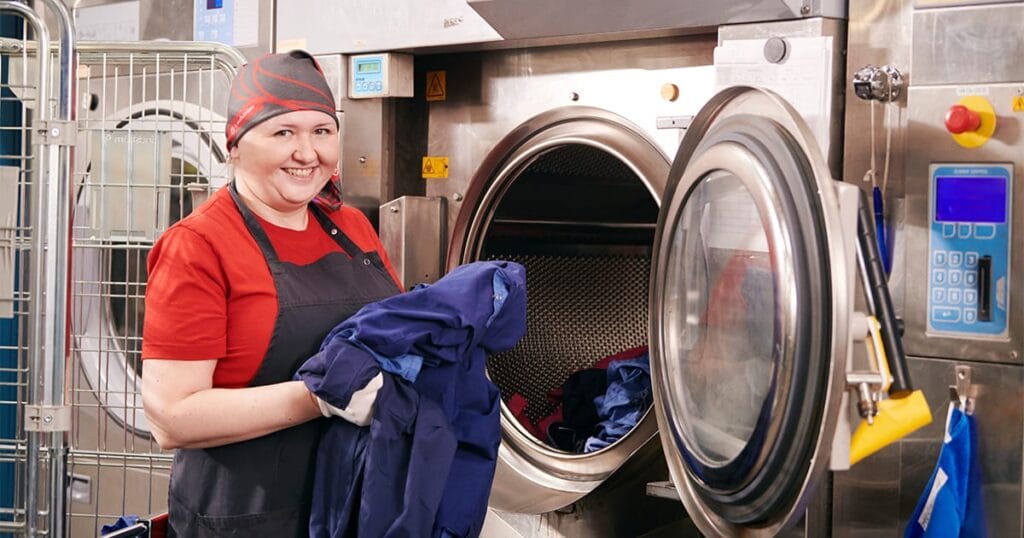
Professional laundering can help pharma facilities maintain more consistent garment hygiene. It also supports inspection, repair, replacement and delivery routines.
How does Lindström support pharmaceutical workwear management?

Lindström supports pharma businesses with pharmaceutical workwear and managed garment services that help reduce internal workload linked to purchasing, washing, maintenance, repairs, replacements and stock control. For companies with controlled-area requirements, Lindström also provides cleanroom service support, including reusable cleanroom garments and contamination-control focused garment management. Lindström’s workwear service can help pharma companies with Pharmaceutical Workwear selection, professional laundering, maintenance, repairs, stock control, clean delivery and reduced internal administration.
Conclusion:
Personnel hygiene, safety, and discipline in these facilities is crucial. There are no compromises on the restricting of the use of pharmaceutical products, and with the utmost quality precautionary measures using pharma uniforms, a breach in contamination is not possible. A lot of consideration needs to go into the buying of pharma uniforms, and if the suggestions are adhered to, the company’s premises will be controlled, secured, and compliant with the rules.
Pharmaceutical Workwear should therefore be selected, worn, laundered and managed as part of a wider contamination-control and compliance programme. When garments are suitable for the area, comfortable for employees and supported by proper laundry and stock routines, pharma companies can improve hygiene, safety and operational consistency.
Frequently Asked Questions:
What is pharmaceutical workwear?
Pharmaceutical workwear is protective clothing used in pharma production, laboratories, cleanrooms, packaging areas and quality control rooms. It helps protect products, workers and controlled environments from contamination risks.
How should pharmaceutical workwear be stored before use?
Pharmaceutical workwear should be stored in a clean, dry and controlled area before use. Clean garments should be kept separate from used or contaminated garments to reduce the risk of cross-contamination.
Can pharmaceutical workwear help reduce particle contamination?
Yes. Pharmaceutical workwear made with suitable low-linting fabrics can help reduce the release of fibers and particles from employees’ clothing and skin into controlled environments.
What should be done if pharmaceutical workwear becomes contaminated during a shift?
If pharmaceutical workwear becomes contaminated during a shift, it should be removed according to the facility’s SOP and replaced with clean, suitable workwear. The contaminated garment should be sent for proper laundering or disposal based on the company’s process.
What are the risks of using damaged pharmaceutical workwear?
Damaged pharmaceutical workwear may release fibers, expose personal clothing, reduce protection or increase contamination risk. Torn seams, broken closures or worn fabric should be repaired or replaced quickly.
What garments are used in pharmaceutical workwear?
Common pharmaceutical workwear garments include lab coats, coveralls, tunics, trousers, cleanroom garments, hoods, masks, gloves, sleeve covers, shoe covers, anti-static uniforms and visitor garments.
How does pharmaceutical workwear support GMP compliance?
Pharmaceutical workwear supports GMP compliance by helping employees wear clean, suitable and controlled protective clothing in production and handling areas. It also supports gowning, sanitation, contamination control and audit readiness.
Can pharmaceutical workwear be washed at home?
Home washing is usually not suitable for pharmaceutical workwear because it is difficult to control hygiene, contamination risk, washing quality, drying, inspection and garment storage.
Why choose managed pharmaceutical workwear services?
Managed pharmaceutical workwear services can reduce the workload of laundering, repairs, replacement, inventory tracking and garment delivery. They also help keep clean and suitable garments available for employees.
Related

What does a workwear designer do? Lindström designers Jenny Selroos and Karmen Lond explain the inner workings of workwear design.

The term circular textiles is becoming increasingly familiar, but what does it actually mean? In simple terms, a circular textile system aims to keep garments...
Know how modern workwear procurement improves compliance, garment traceability, hygiene and inventory efficiency in pharma and food processing.