Medical lab coats: how to choose and manage them well?
Medical lab coats help protect staff clothing, support hygiene routines and create a professional look in healthcare and laboratory environments. But choosing the right coat is only one part of the job. To get real value from medical lab coats, you also need a clear way to clean, inspect, repair, replace and deliver them so staff always have the right garment ready for work.
Why medical lab coats matter in daily work?
Medical lab coats are used across hospitals, diagnostic labs, healthcare facilities, pharma labs and research environments. They help separate work clothing from personal clothing and support a neat, recognizable team image.
For procurement and operations teams, the bigger challenge is often not the coat itself. It is managing hundreds or thousands of coats across shifts, departments, locations and job roles.
A good medical workwear system should answer simple but important questions:
- Do staff have clean lab coats when their shift starts?
- Are the sizes comfortable and suitable for daily work?
- Are damaged coats repaired or replaced on time?
- Are coats washed in a controlled and consistent way?
- Is stock available during busy periods, staff changes or expansion?
- Does the workwear support your professional image?
Buying lab coats is easy. Managing them is harder:
Many organizations begin by looking for lab coats for medical staff as a product purchase. This can work for small teams, but it can become difficult as the organisation grows.
When coats are bought outright, your team may also need to manage:
- garment selection and sizing.
- employee issue and return.
- daily or weekly washing.
- coat repairs and replacements.
- storage of clean and used garments.
- stock shortages.
- inconsistent appearance between departments.
- end-of-life textile handling.
This is why many healthcare and pharma teams look beyond buying laboratory coats. They want a reliable way to keep garments hygienic, available and fit for daily use.
What to consider when choosing healthcare lab coats?
The right healthcare lab coats depend on the work environment, the tasks performed and the level of hygiene required. A coat used in a hospital laboratory may have different needs from a coat used in a pharma quality control lab.
Fabric and comfort:
Staff may wear lab coats for long shifts, so comfort matters. Look for fabrics and designs that allow easy movement and suit the local working environment.
Fit and sizing:
Poorly fitting coats can affect both comfort and appearance. Sleeves that are too long, tight shoulders or limited size availability can make the garment harder to use correctly.
A managed workwear service can help by planning the right size range and replacing garments when employee needs change.
Hygiene and laundering:
Lab coats need consistent laundering. If coats are washed at home or through uncontrolled processes, it can be hard to know whether hygiene, appearance and garment condition are being managed consistently.
Professional laundering helps create a more reliable process for cleaning, inspection and garment care.
Repairs and replacement:
A torn pocket, missing button or worn-out fabric can affect how the coat looks and performs. Small damage should be noticed and handled before it becomes a bigger issue.
Stock availability:
Clean lab coats should be available when staff need them. This requires the right number of garments in circulation, not too few and not too many.
Product purchase vs managed lab coat service:
| Need | Buying lab coats | Managed workwear service |
| Upfront garment ownership | You buy and own the coats | Garments are provided as part of the service |
| Laundering | Managed internally or by a separate laundry | Included as part of the service |
| Repairs | Your team arranges repairs | Repairs are handled within the service model |
| Replacements | Your team tracks and purchases replacements | Worn or damaged garments can be replaced as part of the service |
| Stock planning | Your team manages stock levels | Garment quantities can be planned around usage and delivery cycles |
| Administration | Higher internal workload | Less daily garment administration |
| Professional appearance | Depends on internal control | More consistent garment condition and appearance |
| End-of-life textiles | Your team decides disposal route | Textile lifecycle can be managed more systematically |
A practical checklist for medical lab coat management:
Use this checklist to review your current medical workwear setup:
- Staff have the correct coat type for their role and work area.
- Sizing is reviewed when employees join, leave or change roles.
- Clean and used coats are stored separately.
- Lab coats are washed through a consistent process.
- Damaged coats are identified and repaired or replaced.
- Stock levels are checked against real usage.
- Delivery or distribution is planned around shift needs.
- Garment appearance supports your organisation’s professional image.
- End-of-life coats are handled responsibly.
How Lindström can help?

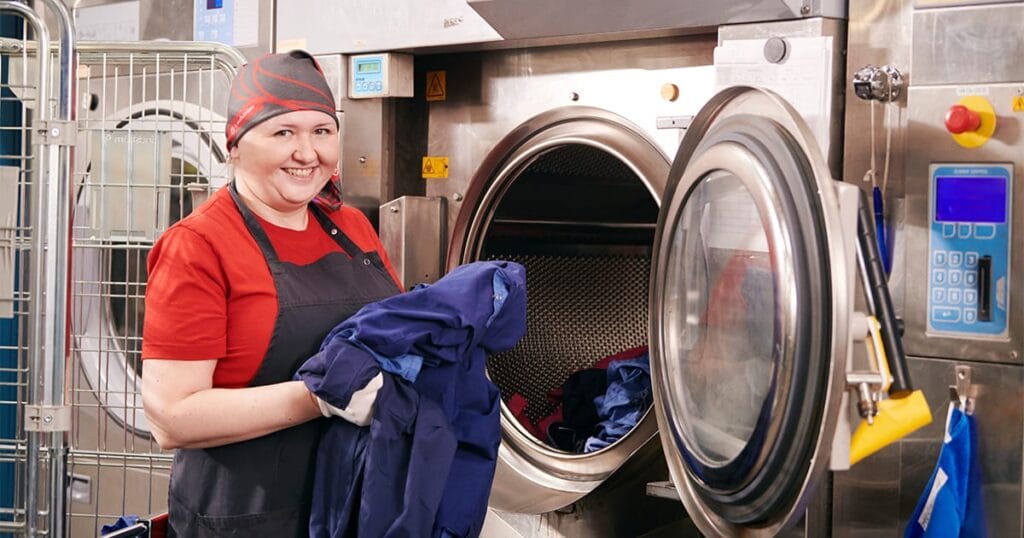
Lindström helps healthcare, hospital and pharma teams manage workwear as a service, not just as a product. Instead of only buying medical lab coats, you can use a rental model where we support the garment lifecycle from selection and delivery to hygienic laundering, maintenance, repairs and replacements.
This helps your team reduce everyday workwear administration. Clean garments are delivered according to the agreed service model, used garments are collected for laundering and garment condition is managed throughout use.
For procurement teams, this can make workwear planning clearer. From operational teams’ perspective, it helps keep garments available. For staff, it supports comfort, hygiene and a professional appearance at work.
Lindström’s workwear service covers garment management, washing, maintenance, repairs, replacements and delivery as part of a textile rental approach. The India website also describes healthcare workwear and pharma workwear services for organizations that need hygienic, reliable clothing solutions.

FAQ – frequently asked questions
What are medical lab coats used for?
Medical lab coats are used by healthcare, laboratory and pharma staff to help protect personal clothing, support hygiene routines and create a consistent professional appearance.
Are lab coats for medical staff the same as pharma lab coats?
Not always. The right coat depends on the work area, hygiene needs, fabric requirements and internal procedures. A hospital lab, diagnostic lab and pharma production site may each need different garment choices.
How often should medical lab coats be washed?
The washing frequency should match the work environment, usage level and your internal hygiene procedures. For larger teams, a managed laundering schedule helps keep clean coats available without relying on employees to wash them at home.
Is it better ot buy or rent laboratory coats?
Buying may suit small teams with simple needs. Rental can be more practical when you need regular laundering, repairs, replacements, delivery, stock control and less internal administration.
How can we avoid shortages of clean lab coats?
Plan garment quantities around staff numbers, shift patterns, wash cycles and delivery schedules. A workwear service can help manage this rotation so clean coats are available when staff need them.
Can medical lab coats be repaired?
Yes, many common issues such as loose buttons, torn pockets or small damage can be repaired if the garment is still suitable for use. Regular inspection helps decide when to repair and when to replace
How does managed medical workwear support sustainability?
A rental model can extend garment life through professional washing, repair and planned replacement. It also gives a clearer route for handling textiles at the end of use instead of treating coats as disposable items.

Related

What does a workwear designer do? Lindström designers Jenny Selroos and Karmen Lond explain the inner workings of workwear design.

The term circular textiles is becoming increasingly familiar, but what does it actually mean? In simple terms, a circular textile system aims to keep garments...
Know how modern workwear procurement improves compliance, garment traceability, hygiene and inventory efficiency in pharma and food processing.