How Do You Maintain ISO Cleanroom Standards in 2025?
Maintaining ISO cleanroom standards in 2025 requires a comprehensive approach that addresses updated regulatory requirements whilst implementing rigorous contamination control protocols. This involves regular monitoring of particulate levels, proper cleanroom garment management, and advanced air filtration systems. Facilities must follow standardised cleaning procedures, conduct routine environmental monitoring, and ensure staff receive proper training on cleanroom behaviours. Documentation and validation of all processes are essential, as is staying current with evolving ISO 14644 standards. A systematic approach to maintenance, coupled with specialised textile services for garment management, creates the foundation for consistent cleanroom compliance.
Understanding ISO cleanroom standards for 2025:
ISO cleanroom standards for 2025 represent an evolution of the ISO 14644 series, the globally recognised framework that governs cleanroom environments across industries. These standards classify cleanrooms based on the maximum allowable concentration of airborne particles, with ISO Class 1 being the most stringent and ISO Class 9 the least. The 2025 updates place greater emphasis on continuous monitoring and documentation processes, reflecting advancements in technology and increasing regulatory scrutiny.
The fundamental classification system remains consistent, measuring particles per cubic metre at specified sizes (typically 0.1μm to 5.0μm). However, the updated standards introduce more rigorous requirements for testing frequency, sampling methodologies, and validation procedures. These changes aim to address gaps identified in previous iterations and align with evolving best practices in contamination control.
Industries particularly affected by these standards include pharmaceuticals, biotechnology, microelectronics, medical device manufacturing, and aerospace. For these sectors, maintaining proper cleanroom conditions is not merely about regulatory compliance—it’s critical for product integrity, patient safety, and operational success.
The 2025 standards also place increased focus on the human element in cleanroom operations, recognising that personnel behaviour remains one of the most significant contamination risks. This includes more detailed protocols for gowning procedures, cleanroom entry and exit, and staff training requirements. For example, ISO Class 8 cleanroom gowning requirements generally call for low-lint garments, gloves, and hair covers, while ISO 7 cleanroom gowning requirements demand more comprehensive full-body coverage with coveralls, masks, and dedicated footwear to minimize contamination risks.
What are the key updates to ISO 14644 standards for 2025?
The 2025 updates to ISO 14644 standards introduce several significant changes designed to enhance cleanroom performance monitoring and compliance verification. Most notably, the standards feature stricter particle count limits for ISO Classes 5 through 9, reflecting the growing precision of manufacturing processes and increased product sensitivity to contamination.
Monitoring requirements have evolved substantially, with continuous particle monitoring becoming mandatory for ISO Classes 5 and cleaner, rather than periodic testing. This shift acknowledges that point-in-time measurements can miss critical contamination events. The standards now specify more detailed protocols for sensor placement, calibration frequency, and data management.
Documentation processes have been significantly expanded, requiring more comprehensive records of:
- Environmental parameter trends over time
- Deviation investigations and corrective actions
- Staff training and competency verification
- Cleaning procedure validation
- Equipment maintenance schedules and outcomes
The updated standards also introduce more specific guidelines for cleanroom recovery times after various disruptive events, from routine maintenance to major interventions. This includes defined recovery testing protocols and acceptance criteria that facilities must document and validate.
Another key change involves greater emphasis on risk assessment methodologies. Cleanroom operators must now implement formal risk management processes to identify potential contamination sources and establish mitigation strategies. This risk-based approach allows for more targeted resource allocation whilst maintaining compliance.
| ISO 14644 Aspect | 2020-2024 Requirements | 2025 Updates |
|---|---|---|
| Particle Monitoring | Periodic testing with defined intervals | Continuous monitoring for ISO 5 and cleaner |
| Recovery Testing | General guidance only | Specific protocols and acceptance criteria |
| Risk Assessment | Recommended but not detailed | Formal process with documentation requirements |
| Data Management | Basic record-keeping | Comprehensive data integrity requirements |
How do cleanroom garment management systems impact compliance?
Cleanroom garment management systems directly influence ISO standard compliance by serving as the primary barrier between human-generated particles and the controlled environment. Effective garment programmes incorporate specialised textiles designed to minimise particle shedding while maintaining comfort for extended wear periods. The 2025 standards place increased emphasis on garment performance verification through regular testing of particle filtration efficiency and durability under typical use conditions.
Proper laundering protocols are critical to garment effectiveness. Standards-compliant facilities must use validated cleaning processes specifically designed for cleanroom textiles, including controlled water quality, specialised detergents, and particulate-free drying environments. These processes must be regularly validated through particle testing of cleaned garments to ensure they meet the appropriate cleanliness classification.
Garment tracking systems have evolved from simple inventory management to comprehensive digital solutions that monitor:
- Individual garment usage history and wear cycles
- Laundering validation records
- Integrity testing results and repair history
- Assignment to specific personnel or cleanroom zones
- Retirement schedules based on validated wear limits
The 2025 standards emphasise the importance of proper garment donning procedures and staff training. This includes documented gowning sequences, verification of proper technique, and regular competency assessments. Many facilities now implement visual aids and gowning rooms designed to minimise contamination during the dressing process.
Storage solutions for cleanroom garments must maintain their cleanliness level between uses. The updated standards specify requirements for dedicated storage areas with appropriate air filtration, regular cleaning protocols, and controlled access to prevent cross-contamination.
What contamination control measures are most effective in modern cleanrooms?
The most effective contamination control measures for modern cleanrooms incorporate a multi-layered approach centered around advanced airflow management. High-efficiency particulate air (HEPA) or ultra-low particulate air (ULPA) filtration systems, combined with precisely engineered air distribution patterns, create environments that actively remove and prevent particle accumulation. The 2025 standards place greater emphasis on airflow visualization testing and regular verification of filter integrity through scanning and particle counting.
Entrance protocols have evolved significantly, with many facilities implementing multi-stage entry systems featuring:
- Preliminary cleaning areas for equipment decontamination
- Airlocks with differential pressure control
- Automated air showers with validated cycle times
- Tacky mats or automated floor cleaning systems
- Sequential gowning areas with appropriate air quality classifications
Material transfer procedures represent another critical control point. Effective systems include dedicated transfer hatches with interlocking doors, pass-through decontamination chambers using UV light or hydrogen peroxide vapour, and validated cleaning protocols for all incoming items. The 2025 standards introduce more specific requirements for material flow patterns and transfer validation.
Surface cleaning technologies have advanced considerably, moving beyond traditional manual wiping to include automated systems, electrostatic disinfection, and materials specifically designed for particle capture rather than redistribution. Documentation requirements now include validation of cleaning agent compatibility with cleanroom surfaces and verification of residue-free results.
Behavioural controls remain essential, with emphasis on minimising unnecessary movement, proper speaking techniques to reduce droplet generation, and restricted personnel access based on training qualifications. Many facilities implement real-time monitoring of personnel movements and automated compliance verification systems to ensure consistent adherence to protocols.
How can textile rental services improve cleanroom compliance?
Specialised textile rental services significantly enhance cleanroom compliance by providing expertly managed garment programmes that meet stringent ISO requirements. These services deliver validated laundering processes specifically designed for cleanroom textiles, utilising controlled environments, specialised detergents, and particulate-free handling techniques. This specialisation ensures garments consistently meet the cleanliness classifications required for specific ISO cleanroom levels, something difficult to achieve with standard laundry facilities.
Professional inventory management eliminates common compliance gaps through:
- Automatic garment replacement based on validated wear limits
- Real-time availability monitoring to prevent shortages
- Size-specific inventory management to ensure proper fit
- Segregation systems to maintain classification-appropriate stock
- Emergency supply protocols for unexpected contamination events
Comprehensive compliance documentation represents another significant advantage of specialised textile services. These providers maintain detailed records of laundering parameters, garment testing results, and lifecycle tracking that can be incorporated directly into facility quality systems. This documentation is increasingly important under the 2025 standards, which require more robust evidence of garment programme effectiveness.
Textile rental services also offer expertise in garment selection and fit assessment. Properly fitted garments significantly reduce contamination risk by minimising gaps and movement-generated particles. Specialised providers can recommend appropriate materials and designs based on specific cleanroom activities, comfort requirements for extended wear, and compatibility with other personal protective equipment.
Many services now incorporate technology-enabled solutions like RFID tracking, automated dispensing systems, and usage analytics that help facilities identify compliance trends and optimisation opportunities. These data-driven approaches align with the increasing emphasis on continuous monitoring in the 2025 standards.
What are the most common ISO cleanroom compliance challenges?
Personnel training consistently ranks among the most challenging aspects of ISO cleanroom compliance. Despite advances in automation, human activities remain the primary source of contamination in most facilities. Effective training programmes must address not only proper procedures but also behavioural psychology and habit formation to create sustainable compliance. The 2025 standards introduce more specific requirements for training frequency, competency verification, and documentation of personnel qualifications.
Contamination sources continue to evolve as manufacturing processes become more sophisticated. Common challenges include:
- Increasingly complex equipment with difficult-to-clean surfaces
- New materials that may shed particles in unexpected ways
- Process chemicals that interact with cleanroom surfaces
- External environmental factors such as construction or weather events
- Supply chain inconsistencies affecting incoming materials
Monitoring consistency presents significant difficulties, particularly as facilities transition to continuous monitoring systems. Challenges include sensor placement optimisation, data management for large volumes of readings, alert threshold determination, and developing appropriate response protocols for different deviation patterns. The 2025 standards provide more detailed guidance but still require considerable facility-specific adaptation.
Documentation management becomes increasingly complex under the expanded requirements. Many facilities struggle with integrating multiple data sources, maintaining complete audit trails, and developing meaningful trend analyses from diverse monitoring points. Digital systems offer solutions but introduce validation requirements and technical dependencies.
Resource constraints affect compliance efforts across all facility types. Cleanroom operation requires significant financial investment in infrastructure, ongoing monitoring, specialised services, and trained personnel. Balancing these costs with production demands requires strategic planning and careful prioritisation of compliance activities based on contamination risk assessment.
How do you implement a sustainable cleanroom program while maintaining standards?
Implementing a sustainable cleanroom programme requires balancing stringent contamination control requirements with environmental responsibility. Energy efficiency represents a primary focus area, with modern facilities implementing variable speed fans, demand-based air exchange rates, and advanced control systems that maintain appropriate air quality while reducing power consumption. The 2025 standards acknowledge these approaches, providing guidance on validation methodologies for energy-optimised systems that still meet particle count requirements.
Waste reduction strategies compatible with cleanroom standards include:
- Reusable garment programmes with validated laundering processes
- Recyclable bouffant caps and shoe covers made from compatible materials
- Bulk packaging for consumables to reduce disposal volume
- Material transfer systems designed to minimise packaging requirements
- Waste segregation protocols to maximise recycling opportunities
Environmentally-friendly cleaning protocols balance contamination control with reduced environmental impact. This includes selecting cleaning agents with biodegradable formulations, implementing microfibre technology to reduce chemical usage, and developing validated cleaning processes that minimise water consumption. The 2025 standards maintain strict effectiveness requirements but allow flexibility in methodology if properly validated.
Sustainable facility design integrates features like LED lighting with extended maintenance intervals, water reclamation systems for washroom facilities, and high-efficiency HVAC equipment. When implemented during initial construction or major renovations, these elements can significantly reduce the operational footprint without compromising environmental controls.
Garment lifecycle management represents another sustainability opportunity. Partnering with textile rental services that offer repair programmes, appropriate laundering techniques to extend garment life, and end-of-life recycling options can significantly reduce waste while maintaining compliance with material specifications in the standards.
| Sustainability Initiative | ISO Compliance Consideration | Implementation Approach |
|---|---|---|
| Energy-efficient HVAC | Must maintain air change rates and filtration efficiency | Variable speed drives with continuous monitoring validation |
| Reusable garment systems | Must meet particle shedding specifications after laundering | Validated cleanroom laundering with lifecycle testing |
| Water conservation | Cleaning validation must demonstrate effectiveness | Low-moisture cleaning technologies with efficacy testing |
| Waste reduction | All materials must meet particulate requirements | Compatible recyclable materials with testing certification |
Essential takeaways for maintaining ISO cleanroom standards in 2025
The foundation for successful ISO cleanroom compliance in 2025 lies in adopting a proactive, risk-based approach to contamination control. Facilities must implement comprehensive monitoring systems that provide continuous visibility into environmental conditions, allowing for early identification of trends before they become compliance issues. This proactive stance aligns with the increased emphasis on data-driven decision making in the updated standards.
Key strategies for maintaining compliance include:
- Developing robust personnel training programmes with regular competency verification
- Implementing validated cleaning and disinfection protocols specific to facility requirements
- Establishing formal risk assessment processes for all cleanroom activities
- Creating comprehensive documentation systems that facilitate trend analysis
- Building preventative maintenance schedules for all critical cleanroom systems
Partnering with specialised service providers offers significant advantages, particularly for aspects requiring specific expertise such as garment management, environmental monitoring, and validation activities. These partnerships can provide access to industry best practices, specialised equipment, and compliance documentation that would be difficult to develop internally.
Staying current with evolving standards remains essential, with many facilities establishing formal regulatory intelligence functions to track changes and assess potential impacts. Professional organizations, industry working groups, and standards bodies often provide advance notice of upcoming changes, allowing for planned adaptation rather than reactive compliance.
Finally, sustainable approaches to cleanroom operation are increasingly recognized as compatible with and complementary to stringent contamination control. By designing programs that address both environmental responsibility and compliance requirements, facilities can achieve operational excellence while reducing their ecological footprint—a balance that will only grow in importance as regulatory and social expectations evolve beyond 2025.


Related
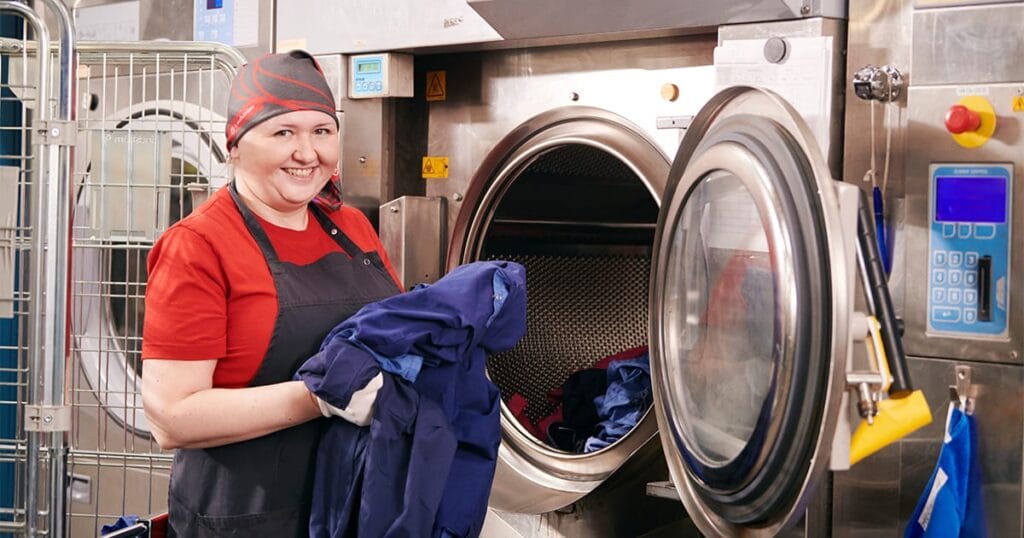
Know how modern workwear procurement improves compliance, garment traceability, hygiene and inventory efficiency in pharma and food processing.

Learn what a sterile gowning procedure is, why it matters in cleanrooms, and how it supports contamination control, GMP compliance, and patient safety.
Learn why cleanroom boot covers are essential for biotech facilities, contamination control, product quality, cleanroom PPE protocols, and workplace safety.