
Durability vs. Disposability: The arguments for why choose reusable aprons as opposed to disposables
If you investigate healthcare services, food processing or the manufacturing industry, aprons are always a crucial part of the protective gear. But a question arises for businesses: do they want to go ahead with the disposable ones, or invest more in producing reusable aprons? Looking at it from an initial perspective, business investing in single-use aprons seems logical, but in the long run, reusing ones seems to be more cost-efficient. Reusable aprons are also important because they support hygiene, comfort and workplace consistency when they are selected and maintained properly. In industries where employees face moisture, stains, food residues, oils, dirt or daily hygiene requirements, the right apron can protect both the worker and the work environment. For hygiene-sensitive workplaces, reusable aprons should be managed in line with food hygiene practices, laundering needs and workplace risk levels.
Making an investment: The expenses related to reusable aprons and disposable ones
- Long-Term Revenues Vs One-Time Spending: Using disposable aprons might lead to there being less spending per unit, but what needs to be accounted for is the bulk ordering done for daily use. Reusable ones seem to require a large investment at first but in the long term through multi-use, this cost decreases significantly over time.
- Sturdiness: Single-use aprons can be easily ripped out but [reusable aprons] on the other hand can sustain harsh conditions and countless cycles of being worn out and laundered as they come coated or are made with vinyl and polyester.
- The maintenance expenses: The reusable aprons of contemporary times are easy to manage as well as clean. Aprons of this kind are also often machine washable and stain-free, which does not require a lot of effort in their maintenance which eliminates the problem of incurring expenses on purchasing cosmetic aprons which are purchased on a regular basis.
This cost difference becomes clearer when aprons are used every day across multiple shifts. Businesses should not only compare the price of one disposable apron with one reusable apron. They should also consider ordering frequency, storage, distribution, waste handling, laundering, stock control and replacement needs.
| Cost factor | Disposable aprons | Reusable aprons |
| Purchase frequency | Frequent repurchase required | Bought or rented for repeated use |
| Daily waste | Higher | Lower |
| Durability | Lower for regular work | Higher for repeated use |
| Storage | Continuous stock needed | Stock can be planned by usage |
| Maintenance | Usually not repaired or reused | Can be washed, inspected and replaced when needed |
| Long-term value | Can become costly with daily use | More cost-efficient when managed properly |
Environment greening – Applicable waste reduced
It is no longer business as usual since the majority of places have now become environmentally concerned and such businesses have to deal with the regulations set by authorities. The disposable version of an apron is one type that poses a large plastic problem since these products are often made of non-biodegradable polyethene.
In contrast, reusable aprons are eco-friendly:
- Reduced Waste: With a decline in the number of aprons that are thrown away, less space is taken up in the landfill.
- Sustainable Materials: It has become common in most, if not all, reusable aprons to be produced with recyclable or servable products as a means of efficient green business.
- Compliance with the eco-regulations: The companies will comply with the eco-regulations brought about by the growing awareness and corporate social responsibility of the use of reusable items.
Reusable aprons support sustainability because they reduce dependence on single-use items. Instead of throwing away aprons after every use, businesses can extend garment life through proper washing, maintenance and responsible replacement. This can help reduce daily disposal volumes, unnecessary storage of disposable stock and the operational workload linked to frequent repurchasing.
Sustainability should not come at the cost of hygiene. Reusable aprons need a proper cleaning and storage process so they remain suitable for daily workplace use.
What are reusable aprons?
Reusable aprons are protective garments designed to be worn multiple times after proper cleaning and maintenance. They are usually made from durable materials that can handle repeated use, laundering and workplace exposure.
Depending on the industry, reusable aprons may help protect workers from:
- food stains and liquid splashes.
- oil, grease and dirt.
- cleaning agents or mild chemicals.
- moisture in wet work areas.
- dust or product residue.
- contamination from personal clothing.
- daily wear in production or service environments.
Unlike disposable aprons, which are discarded after one use or limited use, reusable aprons are built for a longer service life. In food-related environments, aprons should also support clean handling routines and reduce contamination risks in line with protective clothing in food handling guidance.
List of industries that require the use of reusable aprons:
Some sectors, activities which concern people wearing reusable aprons are, for example:
- Medicare Sector: This is to ensure that those providing health care services are not soaked or dirty while the area remains clean.
- Catering Services: These materials are made from stain-resistant fabrics, are easy to clean and are hygienic with an extended replacement cycle.
- Manufacturing Industry: Durable and long-lasting aprons that protect from industrial oil, chemicals and equipment.
Reusable aprons are also useful in several other industries where hygiene, comfort and repeated garment use matter.
| Industry | Common apron use |
| Food processing | Protection from food residues, liquids and hygiene risks |
| Bakeries | Protection from flour, dough, ingredients and stains |
| Dairy and beverage | Protection from splashes, moisture and product contact |
| Fishery and meat industry | Protection from wet conditions, residues and odours |
| Hospitality and restaurants | Kitchen, service and front-of-house protection |
| Healthcare | Protection from stains, fluids and routine hygiene tasks |
| Laboratories | Protection from spills and controlled work activities |
| Manufacturing | Protection from dirt, grease, dust and light industrial exposure |
| Cleaning and facility teams | Protection from moisture and cleaning-related splashes |
The same apron should not be used for every workplace. A food production apron may need different material, coverage and laundering requirements compared with an industrial or hospitality apron.
How are businesses paving the way for the adoption of reusable aprons?
- Improved Aesthetics: Commercials and consumers would welcome the refined look reusable aprons give since it is superior to the standard single-use one.
- Advertising Uses: It is also possible for businesses to include some of the reusable aprons which are intended for marketing and sells, that bear the company’s logo.
- Consumer Friendly Design: Reusable aprons have been designed looking at the consumer’s requirements with breathing fabric used in the straps around the neck which allows free movement.
In addition to appearance and branding, reusable aprons also support a more organised workwear system. They can be selected by department, colour, work area or hygiene level, making it easier for supervisors to identify whether employees are wearing the right apron for the task.
How to choose the right reusable aprons?
Before selecting reusable aprons, businesses should review where and how the aprons will be used. The right apron material and fit can improve comfort, hygiene and daily performance.
Important selection points include:
- type of work being performed.
- exposure to liquid, oil, dirt or residue.
- hygiene requirements of the work area.
- comfort during long shifts.
- apron length and body coverage.
- material durability.
- ease of washing and drying.
- colour or design for department identification.
- compatibility with gloves, sleeves or other PPE.
- repair and replacement process.
- clean and used garment storage.
The best reusable apron is not simply the thickest or most expensive one. It is the apron that matches the work task, protects the employee, supports hygiene and can be maintained properly.
Reusable aprons vs disposable aprons:
Both reusable and disposable aprons have a role in workplace protection. The right choice depends on the task, hygiene risk, cleaning process and usage volume.
| Factor | Reusable aprons | Disposable aprons |
| Usage | Designed for repeated use | Designed for single or limited use |
| Durability | Stronger for regular work | Can tear more easily |
| Waste | Reduces daily waste | Creates recurring waste |
| Cost over time | Better value for regular use | Lower upfront cost but frequent repurchase |
| Hygiene control | Needs proper washing and storage | Useful for single-use situations |
| Comfort | Can offer better fit and coverage | Often basic and less durable |
| Management | Needs laundry and stock control | Needs continuous purchasing and disposal |
Disposable aprons may still be useful for visitors, short-term tasks or specific contamination-control needs. But for regular daily use, reusable aprons are often more practical and sustainable. Many businesses compare reusable vs disposable PPE based on hygiene, durability, operational fit and total usage volume before finalising their approach.
Hygiene and laundering considerations:
Reusable aprons must be cleaned correctly to remain hygienic and suitable for work. This is especially important in food production, healthcare, laboratories and other hygiene-sensitive environments.
Poor apron management can create problems such as:
- used aprons being mixed with clean ones.
- stains and residues not being removed properly.
- wet aprons being reused before drying.
- damaged aprons remaining in circulation.
- workers taking contaminated aprons home.
- inconsistent washing between employees or shifts.
A proper laundering process helps ensure aprons are washed, dried, inspected and returned in usable condition. It also supports consistency across teams and shifts.
Why renting reusable aprons can be better than buying?
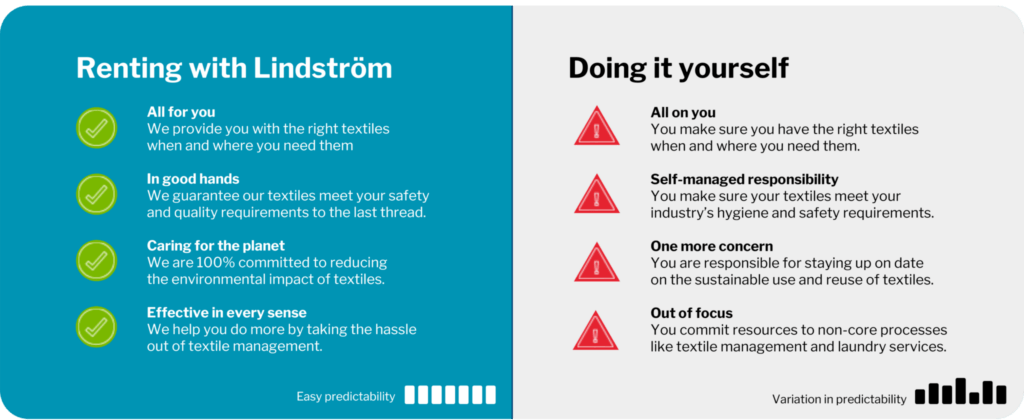
Buying reusable aprons may work for small teams, but managing them internally can become difficult as the business grows. Companies need to handle purchasing, washing, drying, repairs, replacements, storage and stock control.
An apron rental service can simplify this process.
| Buying reusable aprons | Renting reusable aprons |
| Company purchases aprons upfront | Aprons are supplied as part of a service |
| Internal team manages washing | Professional laundering is included |
| Repairs need manual tracking | Maintenance and replacement can be included |
| Stock shortages may occur | Stock can be planned by role and usage |
| Used and clean aprons need storage | Collection and delivery routines support garment flow |
| Admin workload increases | Workwear management becomes easier |
For businesses with regular apron usage, rental can make apron management more predictable and reduce the workload on internal teams.
How Lindström supports reusable apron management?
Lindström helps businesses manage workwear through a workwear rental service. For companies using reusable aprons, this can reduce the internal workload linked to purchasing, washing, drying, repairs, replacements and stock control. This is especially useful for food industry workwear, fishery workwear, healthcare workwear, hospitality and industrial workplaces where aprons are used every day. Lindström’s service can support apron selection, regular laundering, garment maintenance, repair and replacement routines, clean delivery, stock management and reduced internal administration.
Conclusion:
The disposable aprons; though easier to use than the reusable ones; seem neither cost-effective nor sustainable in the bigger picture which is what companies are trying to avoid. A more viable solution is reusable aprons as they are cheaper, environmentally friendly, comfortable, and long-lasting. Open up a new opinion on disposability and stand up for what should be the new normal – strength for a better planet. With Lindstrom’s high-quality reusable aprons, every business can make decisions that would profit both the business as well as the Earth. When supported by the right laundering, repair and rental process, reusable aprons can also help businesses maintain hygiene, reduce waste and simplify everyday apron management.

Frequently Asked Questions:
What are reusable aprons?
Reusable aprons are protective garments designed to be worn multiple times after proper cleaning. They help protect workers from stains, spills, dirt, moisture, residues and light workplace exposure
Are reusable aprons better than disposable aprons?
Reusable aprons are often better for regular daily use because they are more durable, create less waste and can offer better long-term value. Disposable aprons may still be useful for visitors or temporary tasks.
How should reusable aprons be cleaned?
Reusable aprons should be washed according to the material, hygiene needs and contamination level. In hygiene-sensitive industries, professional laundering is often better than home washing.
Which industries use reusable aprons?
Reusable aprons are commonly used in food processing, bakeries, dairy, fishery, meat handling, restaurants, healthcare, laboratories, cleaning, manufacturing and hospitality.
Are reusable aprons suitable for wet work areas?
Yes, if they are made from suitable waterproof or water-resistant materials. Wet work areas may need aprons that protect against splashes, moisture, oils or residues.
Should reusable aprons be colour-coded?
Colour coding is useful when different teams, departments or hygiene zones need to be separated. For example, one colour can be used for food handling, another for cleaning teams and another for visitors. This makes it easier for supervisors to identify whether employees are wearing the correct apron for their work area.
Are reusable aprons comfortable for long shifts?
Reusable aprons can be comfortable for long shifts when they are correctly sized and made from suitable materials. Adjustable straps, proper length, flexible fabric and lightweight construction help workers move more easily during daily tasks.
How can companies prevent cross-contamination with reusable aprons?
Companies can reduce cross-contamination risks by separating clean and used aprons, assigning aprons by work zone, using colour coding, following proper laundry routines and replacing damaged aprons quickly. Aprons used in high-risk areas should not be mixed with aprons used in low-risk or non-production areas.
Are reusable aprons cost-effective for small businesses?
Reusable aprons can be cost-effective for small businesses if aprons are used regularly and can be washed properly. For very occasional use, disposable aprons may still be practical. The decision should depend on usage frequency, laundry capability, hygiene needs and waste reduction goals.
Can reusable aprons support food safety?
Yes. When cleaned, stored and managed properly, reusable aprons can help prevent personal clothing from entering food handling areas and support hygiene routines.
Related

What does a workwear designer do? Lindström designers Jenny Selroos and Karmen Lond explain the inner workings of workwear design.

The term circular textiles is becoming increasingly familiar, but what does it actually mean? In simple terms, a circular textile system aims to keep garments...
Know how modern workwear procurement improves compliance, garment traceability, hygiene and inventory efficiency in pharma and food processing.