

How to choose the right lab uniform for your workplace?
A lab uniform should match the risks in your workplace, not just the job title of the wearer. A basic lab coat may be suitable for some testing or support areas, while pharma, healthcare and cleanroom environments may need laboratory workwear with stricter hygiene, fit, laundering and replacement controls. The right choice depends on what your team handles, how clean the area must stay and how garments are washed, maintained and delivered.
Why the right lab uniform matters?
A laboratory uniform protects more than the person wearing it. In many workplaces, it also helps protect samples, products, equipment and controlled areas from contamination.
For laboratory managers and quality assurance teams, the question is not only “Which garment should we choose?” It is also:
- Is the garment suitable for the work area?
- Can it reduce relevant workplace risks?
- Is it comfortable enough for daily use?
- How will it be washed and checked?
- Who repairs or replaces it when it is damaged?
- Will clean garments always be available when shifts begin?
For procurement teams, this is where a service-led model becomes useful. Instead of only buying lab coats or uniforms, you can plan the full garment lifecycle: selection, stock, laundering, repairs, replacement and delivery.
Start with workplace risks?
Different labs need different levels of protection. A laboratory uniform used in a quality control lab may not be suitable for a sterile pharma area or a contamination-controlled production zone.
Common risks to consider:
| Workplace risk | What to check when choosing a lab uniform |
| Spills and splashes | Garment coverage, sleeve length, closure type and fabric suitability |
| Product contamination | Low-linting fabric, controlled laundering and clear changing routines |
| Cross-contamination | Separation of clean and used garments, defined collection and delivery process |
| Heat or long shifts | Breathable fabric, fit, wearer comfort and size availability |
| Frequent washing | Fabric durability, colour retention, repair process and replacement plan |
| Audit expectations | Documented garment care, stock control and clear responsibilities |
Choose the right garment type for the area:
A lab coat is often the most recognised laboratory garment, but it is not always enough. Some workplaces need a complete laboratory uniform system, while controlled environments may need cleanroom garments and accessories.
Basic laboratory areas:
For general laboratory work, a lab coat or simple laboratory uniform may help create a professional appearance and support basic hygiene routines. The focus is usually on comfort, easy movement and regular washing.
Pharma and healthcare labs:
A pharma lab uniform may need stricter control. Teams may need garments that are suitable for controlled hygiene routines, changed at defined intervals and professionally laundered. Procurement should also consider stock availability for shifts, visitors and new employees.
Cleanroom and contamination-controlled areas:
Cleanroom areas need a more careful approach. Garments should be selected based on the cleanliness needs of the area and the contamination risks linked to people, movement and garment handling. In these environments, laundering, packing, tracking and replacement are as important as the garment design itself.
Do not choose fabric on comfort alone:
Comfort matters because people are more likely to wear garments correctly when they fit well and feel suitable for their work. However, fabric should also support hygiene and durability.
When comparing laboratory workwear, check:
- Whether the fabric is suitable for the work area.
- Whether it can withstand repeated professional laundering.
- Whether it sheds visible lint or fibers.
- Whether it supports wearer comfort during long shifts.
- Whether it maintains its fit and appearance over time.
- Whether damaged garments can be repaired without affecting function .
In pharma or cleanroom settings, avoid making fabric decisions only on purchase price. A garment that wears out quickly, shrinks, becomes uncomfortable or is washed inconsistently can create more work for quality and operations teams.
Fit and sizing affect compliance:
A lab uniform should not make work harder. Poorly fitted garments can lead to rolled-up sleeves, open coats, incorrect layering or discomfort during long shifts.
A good fit supports:
- Easier movement.
- Better coverage.
- More consistent wearing habits.
- A professional team appearance.
- Fewer requests for ad hoc replacements.
For large teams, size availability and stock planning are important. If employees cannot find the right size, they may use an unsuitable garment or delay work while waiting for a replacement.
Plan how garments will be washed:
Washing is one of the biggest differences between buying uniforms and using a managed textile service. When lab uniforms are washed at home or handled informally, the organisation has less control over the process, garment condition and availability.
For a more controlled approach, define:
- How often garments should be changed?
- Where used garments are collected ?
- How clean and used garments are separated ?
- Who checks for stains, tears or missing fasteners?
- How are garments repaired or replaced?
- How emergency stock is handled?
- How new joiners receive garments?
Build a simple lab uniform checklist:
Use this checklist before selecting or reviewing your lab uniform system.
Lab uniform selection checklist:
- Have we mapped the risks in each work area?
- Do we know where a lab coat is enough and where a fuller laboratory uniform is needed?
- Have quality assurance and production teams agreed on garment requirements?
- Is the fabric suitable for repeated laundering?
- Are sizes available for all users?
- Is there a clear process for damaged garments?
- Do we know how many garments each employee needs?
- Are clean garments available before each shift?
- Is there a collection point for used garments?
- Can procurement see the full cost of garment care, not only the purchase cost?
Buying lab uniforms vs using a textile rental service:
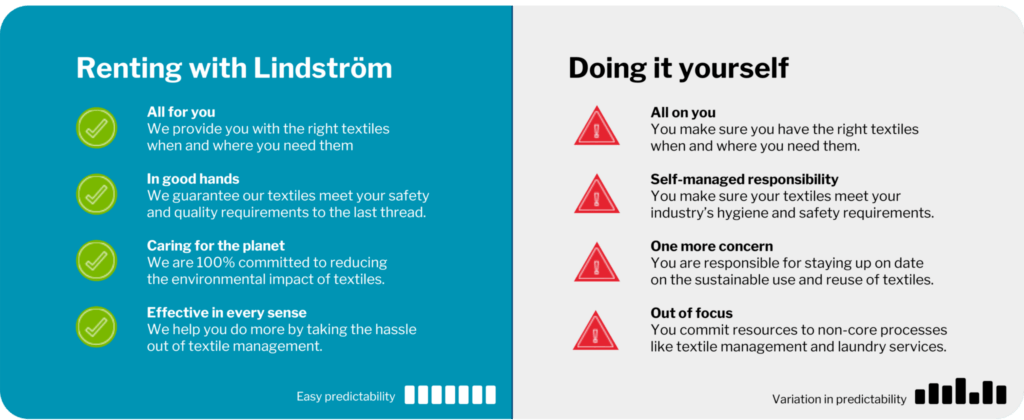
Buying garments can look simple at first, but it leaves the organisation responsible for washing, stock, repairs and replacement. A rental service can reduce this daily workload.
| Area | Buying lab uniforms | Textile rental service |
| Upfront effort | Organisation selects and purchases garments | Service partner helps plan garments and quantities |
| Washing | Managed internally, outsourced separately or left to users | Included as part of the service |
| Repairs | Internal team must arrange repairs | Repairs can be part of the garment service |
| Replacements | Procurement must reorder when needed | Replacement planning is built into the service |
| Stock availability | Site must monitor shortages | Service model supports regular delivery and stock control |
| Sustainability | Depends on internal repair and disposal habits | Garment lifecycle can be extended through maintenance and responsible end-of-life handling |
| Convenience | Multiple tasks for procurement, quality and operations | One service covers garment care, delivery and lifecycle management |
How can Lindström help?

Lindström helps companies manage laboratory uniforms and pharma workwear as a service, not as a one-time product purchase. That means we look at the full garment lifecycle: selecting suitable workwear, delivering clean garments, collecting used garments, laundering them hygienically, maintaining and repairing them, replacing garments when needed and supporting stock availability.
For pharma and cleanroom environments, Lindström offers service pages focused on workwear rental for the pharmaceutical industry, pharma and laboratory uniform rental and cleanroom textile services. These are useful next steps for readers who need a more controlled garment system.
This approach can help laboratory managers and procurement teams reduce everyday garment management work. It also gives quality teams a clearer process for garment care, rather than relying on informal washing or manual stock checks.
Conclusion:
Choosing a lab uniform is not only about selecting a coat, colour or fabric. It is about building a reliable garment system that fits your workplace risks, hygiene needs and daily operations.
For pharma companies, healthcare labs, diagnostics facilities and quality control teams, the best results come from looking at the full lifecycle: fit, laundering, repairs, replacement, delivery and stock availability.

FAQ – frequently asked questions
What is the difference between a lab coat and a lab uniform?
A lab coat is usually one garment worn over clothing. A lab uniform can include coats, trousers, tunics, coveralls or other garments depending on the workplace. In pharma or controlled areas, a full uniform system may be more suitable than a single coat.
How do I choose the right lab uniform for a pharma lab?
Start with the work area, contamination risks, hygiene needs and changing routines. Then review fabric, fit, laundering, garment tracking, repair and replacement needs. Quality assurance, production and procurement teams should agree on the final requirements.
Can employees wash lab uniforms at home?
For some basic workplaces, organisations may allow this. However, for pharma, healthcare or controlled environments, home washing may not give enough control over hygiene, garment condition or separation from everyday clothing.
How many lab uniforms does each employee need?
This depends on shift patterns, change frequency, laundry turnaround and emergency stock needs. A rental service provider can help calculate the right quantity so employees have clean garments available without overstocking.
When should a lab uniform be replaced?
Replace a garment when it is damaged, no longer fits properly, has worn fabric, has broken closures or no longer meets the needs of the work area. In controlled environments, replacement should follow approved garment lifecycle rules.
Is textile rental better than buying lab uniforms?
Textile rental can be useful when you want one service to manage garments, washing, repairs, replacement, delivery and stock. Buying may suit smaller or low-risk settings, but it leaves more responsibility with your internal teams.
What should procurement teams check before choosing a lab uniform supplier?
Procurement should look beyond unit price. Check garment suitability, service coverage, laundering process, stock planning, repair and replacement support, delivery reliability and sustainability approach.

Related

Learn how waterproof workwear for fishery helps protect workers in wet seafood processing areas while supporting hygiene, comfort and garment management.

Learn what a sterile gowning procedure is, why it matters in cleanrooms, and how it supports contamination control, GMP compliance, and patient safety.

Learn how fishing industry uniforms support seafood hygiene, HACCP compliance, worker safety, odour control, and audit readiness.